 Melkbosstrand
Built around its Atlantic shoreline, Melkbosstrand grew into a residential coastal community on Cape Town’s northern edge. Its broad beach is backed by low-density neighbourhoods and the flat coastal plain, while Table Mountain defines the wider Cape Peninsula to the south. Melkbosstrand lies south of the Koeberg Nuclear Power Station, home to South Africa’s only commercial nuclear power plant. Part of the City of Cape Town, the settlement has a beachgoing culture shaped by surfing, fishing and walks along the coast. Inland, open land and aviation infrastructure mark the transition from suburb to the Cape’s rural fringe.
Generated by AI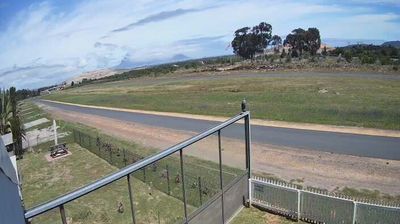


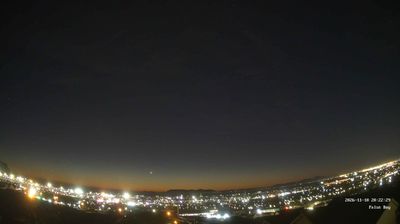

Built around its Atlantic beachfront, Melkbosstrand grew into a coastal residential community within metropolitan Cape Town. On South Africa’s west coast, its sandy shore and dunes face the open Atlantic rather than a sheltered bay, marking the transition between the city’s northern edge and the West Coast’s coastal plain. Its Afrikaans name means “milk-bush beach”, referring to a local shrub with milky sap. North of the settlement stands Koeberg Nuclear Power Station, Africa’s only commercial nuclear power station and a major element of the Western Cape’s infrastructure. See how Melkbosstrand fits into Cape Town’s wider Atlantic coastline by browsing webcams nearby.
2 webcams
Western Cape occupies South Africa’s south-western coastal belt and adjoining mountain valleys. At these coordinates, the interior lies in the Breede River valley, where the Cape Fold Mountains frame vineyards, orchards and farming towns. The province extends from the Atlantic coast around Cape Town towards the Indian Ocean shoreline of the Garden Route, encompassing sharply contrasting climates and terrain. Table Mountain is its defining landmark, while the wine districts of Stellenbosch, Paarl and Robertson sustain a long-established Cape wine tradition. Its identity also reflects the heritage of the Cape’s Indigenous Khoisan peoples, Dutch colonial settlement and modern South Africa’s diverse communities. See how the Breede River valley connects with the wider Western Cape by browsing nearby webcams.
19 webcams
The terrain of South Africa ranges from coastal lowlands along the Indian Ocean in the east to high inland plateaus across the centre, producing marked regional climate contrasts. The Drakensberg forms a rugged eastern escarpment, while Atlantic and Indian Ocean shores frame cities including Cape Town and Durban. Table Mountain stands above Cape Town, and the Cape Floristic Region is internationally noted for its exceptional plant diversity. South Africa’s modern identity is inseparable from apartheid and the democratic transition of 1994, a history explored at Johannesburg’s Apartheid Museum. Twelve official languages reflect the country’s diverse communities. Continue through nearby webcams to explore different parts of South Africa.
62 webcams