 Malax: Tie 673 - Petolahti - Tie
Built around coastal farming communities, Malax grew into a bilingual rural municipality on Finland’s Gulf of Bothnia coast. Its Finnish name is Maalahti, while Malax is the Swedish name used by the area’s Swedish-speaking majority. Fields, managed woodland and scattered homes give the municipality a low-lying, working-rural character rather than an urban profile. Road 673 passes through the Petolahti area, connecting small settlements across the Ostrobothnian plain. The Gulf of Bothnia has long shaped settlement and livelihoods along this stretch of western Finland. Agriculture, forestry and the bilingual traditions of Ostrobothnia remain central to local identity, where Finnish and Swedish place names commonly appear side by side.
Generated by AI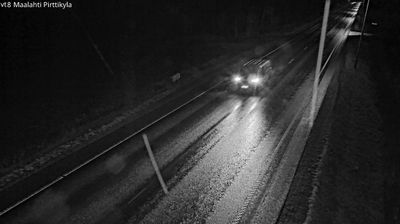
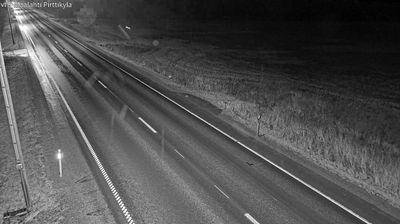

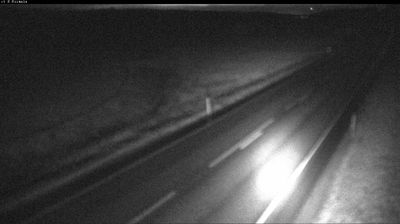
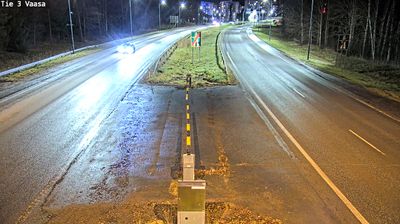
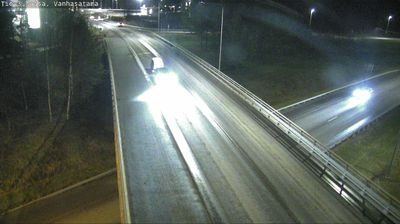

Malax occupies a low, wooded coastal plain beside the Gulf of Bothnia in Finland’s Ostrobothnia region. Known in Finnish as Maalahti, it is a bilingual municipality where Swedish is the majority language, reflecting the long-established Swedish-speaking culture of this part of the coast. Farms, forests and a dispersed network of villages shape the area between Vaasa and the outer archipelago. Offshore, the Kvarken Archipelago shows the continuing land uplift that followed the Ice Age and forms Finland’s UNESCO-listed contribution to the High Coast/Kvarken Archipelago World Heritage Site. View additional webcams nearby to better understand how Malax and the Gulf of Bothnia coast relate to their surroundings.
3 webcams
Ostrobothnia stretches from the Gulf of Bothnia coast to the inland forest belt, encompassing broad farmland, river valleys and a low, gradually rising shoreline. Vaasa, the regional centre, reflects the area’s bilingual Finnish and Swedish-speaking character. Offshore, the Kvarken Archipelago is part of the UNESCO-listed High Coast/Kvarken Archipelago, recognised for land uplift that continues to reshape its shallow waters and islands. The coast is also linked by ferry to Umeå in Sweden, underlining Ostrobothnia’s long connection with the wider Gulf of Bothnia. Discover other points of interest through webcams located across Ostrobothnia.
81 webcams
The terrain of Finland ranges from low coastal plains along the Gulf of Bothnia to fells in Lapland, creating a country of forests, lakes and long northern distances. More than 180,000 lakes shape everyday life, while the Lakeland region is threaded with waterways and islands. Helsinki, on the Gulf of Finland, combines neoclassical landmarks around Senate Square with contemporary Finnish design. Farther north, the Sámi are Finland’s only recognised Indigenous people, and their culture remains closely connected to the Arctic region. In winter, snow and ice transform the north; in summer, long daylight extends outdoor life well into the evening. Continue through nearby webcams to explore different parts of Finland.
1.7K webcams