 Malacca City
Built around the mouth of the Melaka River, Malacca City grew into one of Southeast Asia’s major trading ports. Its position on the Strait of Malacca brought Malay, Chinese, Indian, Arab and European merchants into the same entrepôt, while the Malacca Sultanate helped shape the wider region from the early 15th century. Portuguese forces captured the city in 1511; Dutch rule followed in 1641, leaving a layered streetscape of shophouses, temples, mosques and colonial civic buildings. The Dutch-built Stadthuys and Christ Church stand in the old quarter, and the historic cities of Melaka and George Town have been UNESCO World Heritage sites since 2008. Today, central streets connect this heritage core with a compact Malaysian city.
Generated by AI


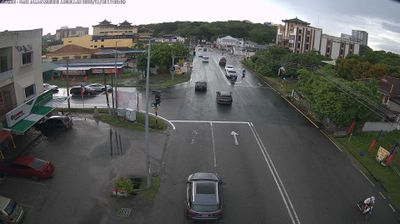

Malacca City lies along the Melaka River close to its mouth on the Strait of Malacca, where a low-lying historic port district meets modern Malaysian urban life. For centuries, this was a trading port linking the Malay Peninsula with routes across the Indian Ocean and South China Sea. Its old centre, inscribed with George Town as a UNESCO World Heritage site in 2008, preserves the Dutch-era Stadthuys and the surviving gate of A Famosa, a Portuguese fort begun after the 1511 conquest. Jonker Street reflects the city’s Peranakan and Chinese heritage through shophouses, food and small traders. Browse further webcams around Malacca to trace how this stretch of Malaysia’s Strait of Malacca coast fits into the region.
24 webcams
Within Malaysia’s regions, Malacca stands apart for the UNESCO-listed heritage of Melaka, a former trading port on the Strait of Malacca. The Melaka River runs through its historic core, where Portuguese, Dutch and British eras have left a visible urban record. A Famosa, the surviving gate of a Portuguese fortress, recalls the city’s early colonial period, while the red Stadthuys complex reflects later Dutch rule. Alongside Malay traditions, Melaka is closely associated with Peranakan culture, noted for its distinctive food and domestic heritage. Its compact old quarters, religious buildings and waterfront trace centuries of exchange between Asia and Europe. Browse further webcams nearby to broaden your view of Malacca.
24 webcams
The South China Sea defines much of Malaysia — it separates Peninsular Malaysia from the states of Sabah and Sarawak on Borneo, while sustaining ports, fisheries and island connections. Malay, Chinese, Indian and Indigenous traditions shape the country’s languages, food and religious life. Kuala Lumpur’s Petronas Twin Towers are a national landmark, while Melaka recalls centuries of trade across the Strait of Malacca. Rainforest reserves and Mount Kinabalu in Sabah contrast with the dense urban energy of the west coast, and Penang is widely known for its street-food culture. Continue through nearby webcams to explore different parts of Malaysia.
107 webcams