 Korenica: Tourist Board of Plitvice Lakes
Korenica has served as a local service centre in the Lika region since the 20th century. Set among wooded limestone hills, the town is closely associated with Plitvice Lakes National Park, whose chain of tufa-barrier lakes and waterfalls received UNESCO World Heritage status in 1979. Korenica’s broad civic square, local businesses and accommodation give this small inland settlement a practical role in an area shaped by protected karst. The park, established in 1949, is Croatia’s oldest national park and remains the defining cultural and economic reference point for Korenica and nearby villages. Lika’s food traditions, including cheese, honey and potato dishes, further distinguish the region.
Generated by AI

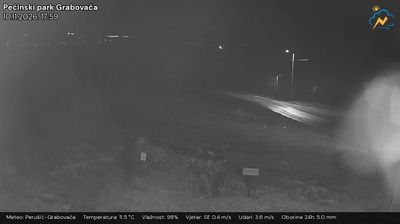
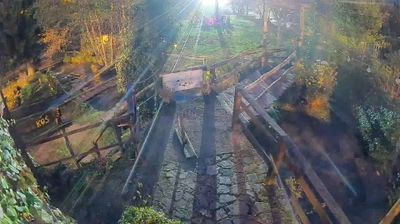



Korenica has served as the administrative centre of the Plitvička Jezera municipality in Croatia’s Lika region since the 1990s. Beneath the slopes of Plješevica, it lies close to Plitvice Lakes National Park, inscribed on the UNESCO World Heritage List in 1979. The park’s 16 interconnected lakes and waterfalls lie in karst terrain and define the wider area as much as the town itself. Korenica was called Titova Korenica from 1946 to 1996, reflecting Yugoslavia’s imprint on local history. Browse additional webcams from Lika-Senj County to extend your view of the Plitvice Lakes area.
1 webcam
Lika-Senj County extends from the Adriatic coast beneath the Velebit range to the limestone plateaus of Lika, encompassing a marked contrast between island-dotted seascapes, mountains and inland karst. In the county’s northeast, Plitvice Lakes National Park is known for its chain of lakes and travertine barriers; it has been a UNESCO World Heritage Site since 1979. The Gacka River, noted for its clear springs, runs through a gentler valley near Otočac. On the coast, the old town of Senj is crowned by Nehaj Fortress, built in the 16th century as a defensive stronghold. Browse other webcams across Lika-Senj County to place this karst-and-coast setting in a wider Croatian context.
24 webcams
Croatia occupies a long Adriatic coastline in southeastern Europe. Its shore is broken into islands and sheltered coves, while the Dinaric Alps rise inland and the Danube forms part of its eastern border. Dubrovnik’s fortified old city faces the sea, and Split grew around Diocletian’s Palace, a Roman complex begun in the early fourth century. Inland, Plitvice Lakes National Park is known for terraced lakes linked by waterfalls and has been a UNESCO World Heritage Site since 1979. Istrian olive groves, Zagreb and Slavonia’s vineyards reveal distinct regional identities. Explore nearby webcam locations that provide complementary perspectives on the Adriatic coast and Croatia’s interior.
381 webcams