 Korcula: Gradski kotar Sv. Antun: Orebić Riva - Ferry to Korčula Live
Among the places of Dubrovnik-Neretva County, Orebić stands out for its long seafaring tradition on the Pelješac Channel. The town occupies the south-western coast of the Pelješac peninsula, facing the island of Korčula across a narrow stretch of Adriatic water. Its waterfront combines a ferry harbour, marina and palm-lined public spaces, while the slopes of Mount Sveti Ilija rise immediately behind the built-up shore. In the 19th century, Orebić was an important home port for Dalmatian sailing ships; merchants and captains left a legacy of substantial stone houses along the coast. Above the town, the Franciscan monastery of Our Lady of the Angels recalls the settlement’s religious and maritime past. Orebić remains a practical link between Pelješac and Korčula as well as a base for exploring the peninsula’s vineyards and coastal settlements.
Generated by AI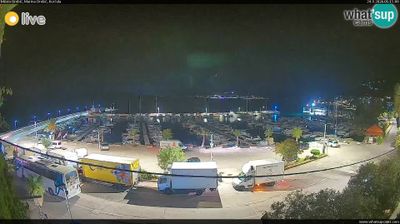
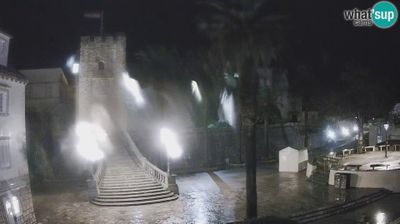

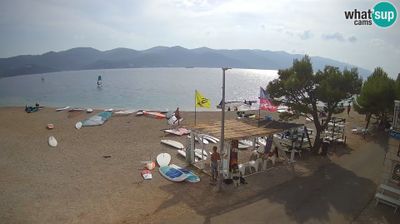


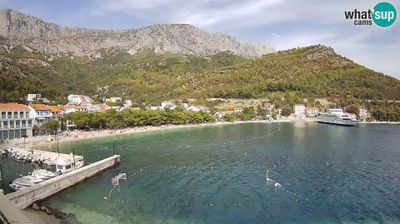
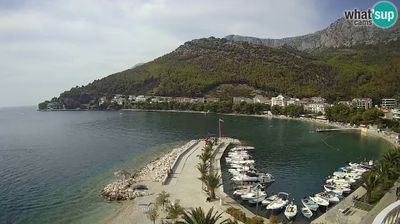

Korčula sits on the Pelješac Channel of the Adriatic Sea in Croatia’s Dubrovnik-Neretva County, where a densely built, walled old town crowns a narrow peninsula on the island’s northeast coast. Its stone lanes follow a fishbone pattern that channels summer breezes while reducing exposure to stronger winds. Venetian rule left a clear imprint on the fortifications, gates and towers, while St Mark’s Cathedral stands on the old town’s central square. Korčula is also associated with Moreška, a traditional sword dance performed by local groups. Ferry services link the town with the Pelješac Peninsula and nearby islands. Browse additional webcams from the surrounding area to extend your view of Korčula and the southern Dalmatian coast.
2 webcams
Shaped by the sea routes of the southern Adriatic, Dubrovnik-Neretva County grew into Croatia’s southernmost county. Its territory is notably fragmented: the walled city of Dubrovnik faces the Adriatic, while the Pelješac Peninsula and the islands of Korčula, Mljet and Lastovo extend along the coast. The Neretva River reaches the sea north of Pelješac, forming Croatia’s best-known delta landscape. Dubrovnik’s Old City, once the centre of the Republic of Ragusa, is enclosed by renowned defensive walls and is UNESCO-listed. Mljet brings a quieter, wooded island character, centred on a national park with saltwater lakes. Continue through nearby webcams to explore different parts of Dubrovnik-Neretva County.
19 webcams
Croatia occupies a long Adriatic coastline in southeastern Europe. Its shore is broken into islands and sheltered coves, while the Dinaric Alps rise inland and the Danube forms part of its eastern border. Dubrovnik’s fortified old city faces the sea, and Split grew around Diocletian’s Palace, a Roman complex begun in the early fourth century. Inland, Plitvice Lakes National Park is known for terraced lakes linked by waterfalls and has been a UNESCO World Heritage Site since 1979. Istrian olive groves, Zagreb and Slavonia’s vineyards reveal distinct regional identities. Explore nearby webcam locations that provide complementary perspectives on the Adriatic coast and Croatia’s interior.
380 webcams