 Karpacz
 has served as a mountain resort in Lower Silesia since the late 19th century. It lies on the northern side of the Karkonosze, Poland’s section of the Sudetes, beneath Śnieżka, the range’s highest summit. Forested slopes, mountain streams and dispersed neighbourhoods give the town a distinctly upland character, while trails and lifts connect it with Karkonosze National Park. One of Karpacz’s defining monuments is the wooden Vang Stave Church, a medieval Norwegian church relocated here in the 1840s. Before 1945, the town was known by its German name, Krummhübel, reflecting the region’s changing borders and identities.
Generated by AI
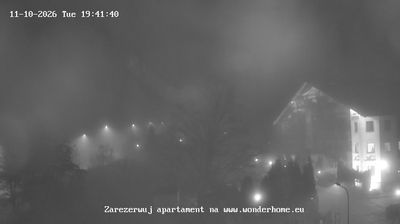


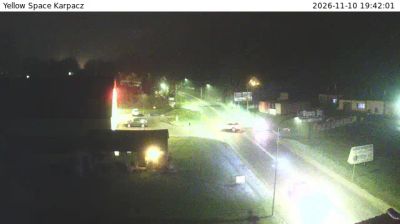


Karpacz sits beside the Łomnica River in Poland’s Lower Silesian Voivodeship, where the northern slopes of the Karkonosze Mountains rise towards Śnieżka, the range’s highest peak. This mountain resort developed as a base for exploring the Sudetes and retains a strongly alpine character, with forested slopes reaching close to town. Its most distinctive monument is the wooden Wang Church, a medieval Norwegian stave church moved here in the 19th century. Trails from Karpacz lead into Karkonosze National Park and towards mountain huts and high ridges. Browse other webcams in Lower Silesia to compare the mountain settings around Karpacz.
11 webcams
Among the regions of Poland, Lower Silesian Voivodeship stands out for the meeting of the Sudetes, the Oder valley and historic Wrocław. Its southern edge reaches the Karkonosze range, where Śnieżka rises as the highest peak of the Sudetes, while broad lowlands and river corridors shape the north. Wrocław is the regional centre, known for its Market Square, the cathedral district of Ostrów Tumski and the UNESCO-listed Centennial Hall. Further west, Książ Castle near Wałbrzych recalls the area’s long Silesian past. Browse additional webcams around the region to extend your view of Lower Silesia.
74 webcams
Poland stretches from the Baltic Sea coast in the north to the Carpathian Mountains along its southern frontier, encompassing broad lowlands, lake districts and upland ranges. The Vistula, the country’s longest river, links Kraków and Warsaw before reaching the Baltic near Gdańsk, while the Masurian Lake District is defined by a dense network of lakes. Kraków’s historic centre, including Wawel Castle, recalls Poland’s former royal capital; Warsaw’s rebuilt Old Town speaks to the city’s recovery after the Second World War. The Białowieża Forest preserves one of Europe’s last primeval lowland forests and is home to European bison. Follow how Poland’s regions relate to one another by browsing webcams across the country.
716 webcams