 Kaiserslautern
 has served as an imperial centre in the Palatinate since the 12th century. Emperor Frederick I Barbarossa maintained a palace here, and remnants of the complex remain near the modern centre. The city lies on the Lauter at the northern edge of the Palatinate Forest, a broad wooded upland in western Germany. Its Japanese Garden, opened in 2000, brings ponds, cascades, stone paths, bridges and planted slopes into the urban fabric. Rather than reproducing one historic Japanese garden, it is a contemporary public space guided by Japanese design principles. This cultivated setting gives Kaiserslautern a distinctive identity alongside its long connection with the Staufen dynasty.
Generated by AI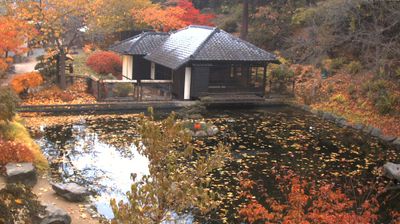
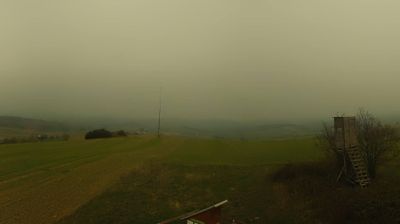
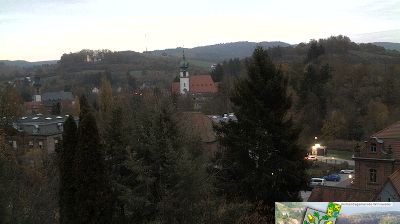
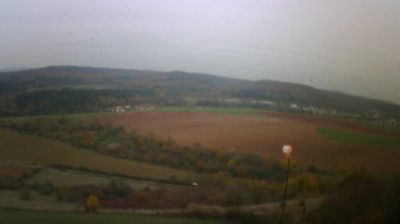
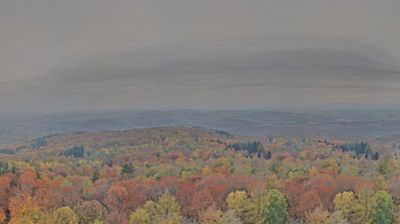
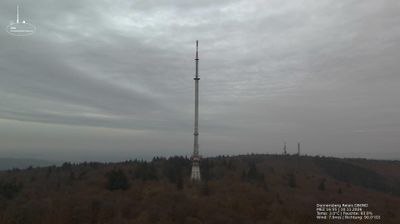
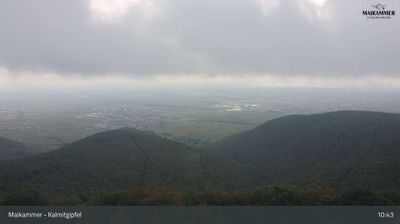
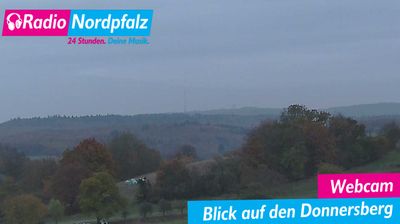
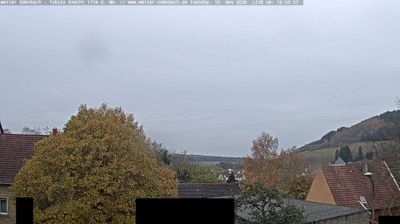
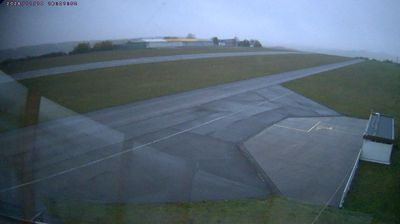

In Rhineland-Palatinate, few cities are as historically bound to the imperial court of Frederick Barbarossa as Kaiserslautern. Set on the Lauter at the northwestern edge of the Palatinate Forest, it grew around a 12th-century imperial palace used by the Hohenstaufen ruler. Remains of the Kaiserpfalz still mark the centre, while nearby Casimir Castle recalls the town's later role as a Palatine residence. Football is another enduring part of local identity: Fritz-Walter-Stadion is home to 1. FC Kaiserslautern and honours the captain of West Germany's 1954 World Cup-winning team. Browse other webcams across Kaiserslautern and the Palatinate Forest to place this setting in a wider geographic context.
2 webcams
The Rhine and Moselle define much of Rhineland-Palatinate – their valleys have long concentrated vineyards, river transport and historic towns. Inland, the wooded Hunsrück plateau contrasts with the vine-covered slopes of the Moselle, Nahe and Mittelrhein wine areas. Trier preserves the Porta Nigra, a Roman city gate within the UNESCO-listed Roman Monuments of Trier. The state also includes part of the UNESCO-listed Upper Middle Rhine Valley, where castles, terraces and riverside settlements shape a celebrated cultural landscape. Wine festivals and the autumn harvest remain central to local life. Browse other webcams across Rhineland-Palatinate to place this setting in a wider geographic context.
123 webcams
Germany stretches from the North Sea and Baltic Sea coasts to the Alps on its southern border, encompassing northern plains, river valleys and forested uplands. The Rhine, Danube and Elbe have long connected its regions, while the Black Forest and Bavarian Alps give the south a more dramatic relief. Berlin’s Brandenburg Gate and Museum Island reflect the capital’s role in German history and culture. Cologne Cathedral, a UNESCO World Heritage Site, rises above the Rhine, and the Bauhaus movement, founded in Weimar in 1919, transformed modern design far beyond Germany. Regional cooking, Christmas markets and brewing traditions bring further character to daily life. Browse additional webcams from the surrounding area to extend your view of Germany.
2.8K webcams