 Ilmenau: Kickelhahn Turm

Ilmenau occupies a valley on the northern edge of the Thuringian Forest in Thuringia. The Ilm runs through the town, while wooded ridges lead into the higher ground of this central German range. Ilmenau is strongly associated with Johann Wolfgang von Goethe, a regular visitor who wrote the poem “Wandrers Nachtlied” on nearby Kickelhahn in 1780. Today, the town combines the academic presence of the Technical University of Ilmenau with long-standing local traditions of glass and porcelain manufacture. Forest paths around Ilmenau connect with the wider network of routes in the Thuringian Forest, including the Rennsteig long-distance trail.
Generated by AI


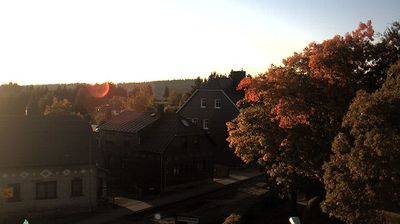
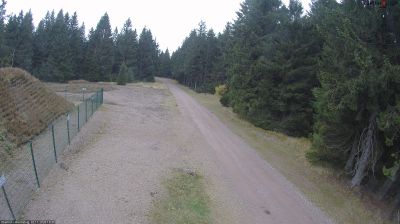

Ilmenau has served as a mining town in Thuringia since the Middle Ages. Set on the Ilm River at the northern edge of the Thuringian Forest, it developed around deposits of silver, copper and other minerals; mining shaped local life for centuries. Johann Wolfgang von Goethe was closely associated with the town and wrote “Wanderer’s Nightsong” on nearby Kickelhahn in 1780. Ilmenau also became known for glassmaking and porcelain production, industries that broadened its economy beyond the mines. Forest paths and the river valley place the town firmly in central Germany’s upland country. Continue with other webcams from the area to see how this part of Thuringia connects regionally.
1 webcam
Thuringia has served as a cultural crossroads within central Germany since the Middle Ages. Its varied terrain runs from the wooded ridges of the Thuringian Forest to the Saale valley in the east, with the long-distance Rennsteig trail following the forest’s crest. Erfurt, the state capital, preserves a historic centre marked by the cathedral and the Krämerbrücke, a bridge lined with inhabited buildings. Weimar is closely associated with Goethe and Schiller and with the Bauhaus movement, while Wartburg Castle near Eisenach recalls the region’s medieval past. Browse additional webcams from the surrounding area to extend your view of Thuringia.
76 webcams
Germany stretches from the North Sea and Baltic Sea coasts to the Alps on its southern border, encompassing northern plains, river valleys and forested uplands. The Rhine, Danube and Elbe have long connected its regions, while the Black Forest and Bavarian Alps give the south a more dramatic relief. Berlin’s Brandenburg Gate and Museum Island reflect the capital’s role in German history and culture. Cologne Cathedral, a UNESCO World Heritage Site, rises above the Rhine, and the Bauhaus movement, founded in Weimar in 1919, transformed modern design far beyond Germany. Regional cooking, Christmas markets and brewing traditions bring further character to daily life. Browse additional webcams from the surrounding area to extend your view of Germany.
2.5K webcams