 Gschnitz: Zentrum

Gschnitz is best known in Tyrol for the Gschnitz Valley, a settled side valley of the Wipptal shaped by the Gschnitzbach. The municipality lies in the Stubai Alps, where steep wooded mountainsides give way to hay meadows and small farmsteads on the valley floor. Its character is rooted in Alpine farming rather than large-scale resort development. Mühlendorf Gschnitz is an open-air site devoted to historic water-powered mills and rural working life, recalling the labour once needed to sustain households in a high mountain valley. To the south, the Gschnitz Valley leads towards the Austrian-Italian border; downstream, the Gschnitzbach joins the Sill near Steinach am Brenner.
Generated by AI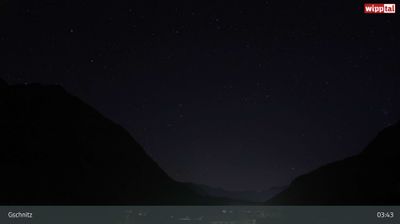
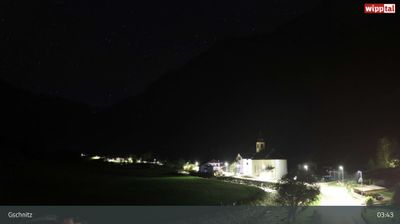



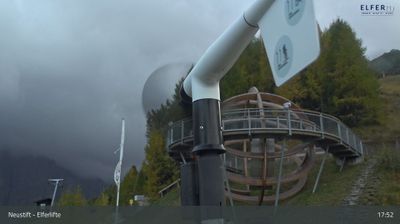

Gemeinde Gschnitz occupies the Gschnitz Valley in Tyrol’s Stubai Alps, a high side valley branching from the Wipptal near the Brenner route. The Gschnitzbach follows the valley floor, while surrounding slopes rise toward the Habicht massif and alpine passes into the wider Stubai range. The parish church of St George is a focal point in the settlement, whose scattered farms and meadows reflect the valley’s long agricultural use. Summer walking routes lead towards the Innsbrucker Hütte and higher mountain terrain. Continue with other webcams from Tyrol to see how the Gschnitz Valley connects across the Wipptal.
3 webcams
Tyrol combines an energetic alpine identity with an established urban culture in a way that reflects its position within the central Eastern Alps. Innsbruck, the regional capital on the River Inn, lies beneath the Nordkette range and brings imperial-era architecture into close contact with high mountain terrain. Its Golden Roof remains one of the city’s best-known historic landmarks, while the surrounding valleys connect settlements, ski areas and hiking country across the region. Continue through nearby webcams to explore different parts of Tyrol.
674 webcams
Austria stretches from the Bohemian Massif along its northern edge to the Carnic Alps on the Italian border, encompassing high Alpine ranges and the Danube lowlands. The Danube links cities including Linz and Vienna, while the Grossglockner, at 3,798 metres, is the country’s highest mountain. Vienna developed for centuries as the seat of the Habsburg court, leaving imperial architecture around the Hofburg and Schönbrunn Palace. Salzburg is closely associated with Wolfgang Amadeus Mozart, who was born there in 1756. Alpine Tyrol, wine-growing areas east of Vienna and the lakes of Salzkammergut add markedly different regional identities. Browse other webcams across Austria to place this setting in a wider geographic context.
3.1K webcams