 Gruyeres: Gruyère
Tucked between the Fribourg Prealps and the Sarine valley, Gruyères is a place whose character is shaped by its elevated medieval core. The walled town occupies a narrow hill, with the Château de Gruyères at its summit. Built for the Counts of Gruyères in the 13th century, the castle now houses a museum. The surrounding canton is closely associated with Gruyère AOP cheese, made from cow’s milk under regulated production rules. Beyond the old town, pastureland and the foothills of the Fribourg Prealps give the area its distinctly rural scale.
Generated by AI

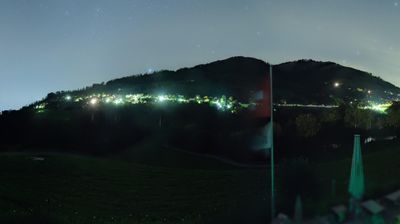


Gruyères occupies a hill above the Sarine valley in the Fribourg Prealps of western Switzerland. Its traffic-free main street leads to the 13th-century Gruyères Castle, the former seat of the counts of Gruyères; ramparts and gardens recall the settlement’s defensive past. The town gave its name to Gruyère AOP, the firm cow’s-milk cheese made in this part of Switzerland, and dairy farming remains central to the regional identity. Moléson rises above the valley, a prominent pre-Alpine summit overlooking the surrounding pastoral country. Explore additional webcams nearby to understand how Gruyères and the Fribourg Prealps relate to their wider alpine setting.
3 webcams
Built around the Sarine River and the medieval city of Fribourg, Fribourg developed into a bilingual Swiss canton where French and German meet. The Sarine cuts a deep bend beneath the old town, whose Gothic Cathedral of St Nicholas is a defining landmark. To the south, the Prealps rise toward the Gruyère district, known worldwide for Gruyère AOP cheese; northward, the canton reaches Lake Murten and Lake Neuchâtel. Medieval towns, dairy farming and university life give this part of western Switzerland a distinct rhythm. Discover further points of interest through webcams located across Fribourg.
31 webcams
Switzerland stretches from the Jura Mountains in the northwest to the Alps in the south, encompassing a central plateau of cities, farms and lakes. The Rhine rises in the Swiss Alps, while Lake Geneva forms part of the country’s southwestern border. Zürich, Geneva and Basel are major urban centres, yet mountain railways and passes remain central to how many regions are experienced. Four national languages—German, French, Italian and Romansh—reflect Switzerland’s distinct cantonal identities. The Matterhorn above Zermatt is among Europe’s most recognisable peaks, and the 1291 Federal Charter is closely associated with the country’s founding tradition. Continue through nearby webcams to explore different parts of Switzerland.
1.4K webcams