 Grainau: Wetterwarte Zugspitze - Blick über den Gipfel nach Osten
Zugspitze straddles the German–Austrian border in the Bavarian Alps, a position that has made it both Germany’s highest mountain and a meeting point between Bavaria and Tyrol. At 2,962 metres, its summit rises above the Wetterstein range, with the Höllental valley descending on the German side. The first recorded ascent was made in 1820 by surveyor Josef Naus and his party. Today, summit terraces, a cross marking the highest point, and rail and cable-car stations make the mountain accessible from Grainau, while the surrounding ridges retain the rugged limestone character of the Northern Limestone Alps.
Generated by AI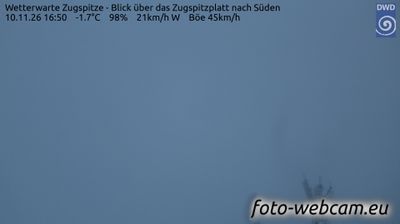
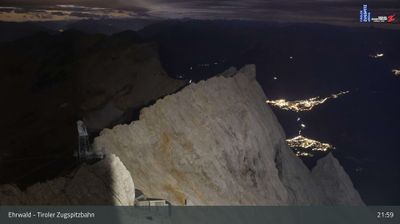

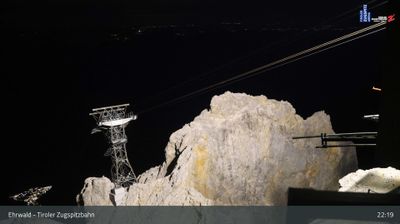
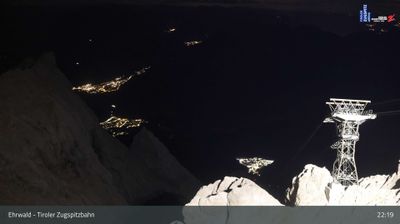
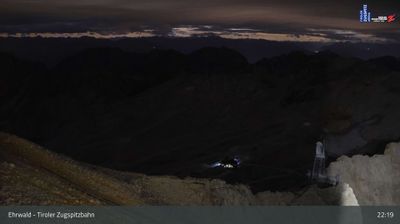
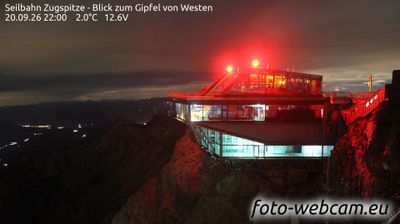
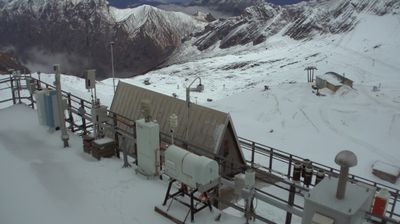

Grainau combines the calm pace of an Alpine settlement with the presence of Germany’s highest peak, reflecting its position beneath the Zugspitze in the Bavarian Alps. The municipality rises from wooded valley ground toward the Wetterstein range, and Lake Eibsee lies at the mountain’s foot. Hammersbach, a district of Grainau, is the starting point for the Höllentalklamm gorge and routes into the Höllental valley. Opened in 1930, the Bavarian Zugspitze Railway runs through Grainau on its way from Garmisch-Partenkirchen to the Zugspitzplatt plateau. Discover other points of interest through webcams located across Grainau and the Bavarian Alps.
14 webcams
Built around the early medieval Duchy of Bavaria, Bavaria grew into Germany’s largest federal state. The Danube crosses its broad centre, while the Bavarian Alps form its southern edge and include the Zugspitze, Germany’s highest mountain. Munich is the state capital and the home of Oktoberfest, a festival rooted in an 1810 royal wedding. Beyond the metropolis, Franconia’s vineyards, Swabian towns and Alpine resorts reveal how varied this part of Germany can be. Browse additional webcams from the surrounding area to extend your view of Bavaria.
870 webcams
Germany stretches from the North Sea and Baltic Sea coasts to the Alps on its southern border, encompassing northern plains, river valleys and forested uplands. The Rhine, Danube and Elbe have long connected its regions, while the Black Forest and Bavarian Alps give the south a more dramatic relief. Berlin’s Brandenburg Gate and Museum Island reflect the capital’s role in German history and culture. Cologne Cathedral, a UNESCO World Heritage Site, rises above the Rhine, and the Bauhaus movement, founded in Weimar in 1919, transformed modern design far beyond Germany. Regional cooking, Christmas markets and brewing traditions bring further character to daily life. Browse additional webcams from the surrounding area to extend your view of Germany.
2.8K webcams