 Gottingen: UMG Universitätsmedizin Göttingen
Built around a medieval market settlement, Göttingen grew into a university city in southern Lower Saxony. Universitätsmedizin Göttingen (UMG) forms a major clinical and research campus on the city’s northern side, bringing together the University of Göttingen’s medical teaching and patient care. The city lies in the Leine valley, with the wooded Göttingen Forest rising to the east. Founded in 1737, the University of Göttingen has shaped local life for generations, from the compact centre around the Gänseliesel fountain to academic institutes across the city. UMG places this long university tradition within a contemporary district of hospitals, housing and transport links.
Generated by AI
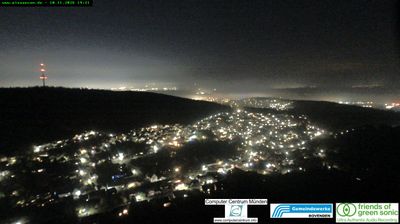



Göttingen sits on the River Leine in southern Lower Saxony, Germany, where the wooded slopes of the Göttingen Forest rise immediately east of the city. The Georg-August University, founded in 1737, has shaped local life for nearly three centuries and given Göttingen an international academic profile; numerous Nobel laureates have studied or taught here. In the pedestrian centre, the half-timbered Old Town preserves the medieval town hall, while the Gänseliesel fountain on the market square remains a familiar civic emblem. The Leine valley leads into open countryside, with the Weser Uplands extending beyond the city. Find related webcams in the surrounding area to build a fuller picture of Göttingen and southern Lower Saxony.
2 webcams
Lower Saxony extends from the North Sea coast to the Harz Mountains, encompassing Wadden Sea mudflats, broad lowlands and wooded uplands. At its northern edge, the Lower Saxon Wadden Sea forms part of the UNESCO-listed Wadden Sea, shaped twice daily by the tides. The Weser crosses the state on its way to the North Sea, while the Elbe marks much of its northeastern border. Inland, the Lüneburg Heath is associated with heather moorland and long-standing sheep farming. Hanover, the state capital, is known for the Herrenhausen Gardens, whose Great Garden is a major baroque ensemble. Explore further webcams across Lower Saxony to place the region in its wider geographic context.
163 webcams
Germany stretches from the North Sea and Baltic Sea coasts to the Alps on its southern border, encompassing northern plains, river valleys and forested uplands. The Rhine, Danube and Elbe have long connected its regions, while the Black Forest and Bavarian Alps give the south a more dramatic relief. Berlin’s Brandenburg Gate and Museum Island reflect the capital’s role in German history and culture. Cologne Cathedral, a UNESCO World Heritage Site, rises above the Rhine, and the Bauhaus movement, founded in Weimar in 1919, transformed modern design far beyond Germany. Regional cooking, Christmas markets and brewing traditions bring further character to daily life. Browse additional webcams from the surrounding area to extend your view of Germany.
2.1K webcams