 Gizycko
Few places in Masuria have a history as closely tied to the waterways of the Great Masurian Lakes as Giżycko. The town stands on the narrow isthmus between Lake Niegocin and Lake Kisajno, near the centre of this interconnected system of lakes and canals. The Łuczański Canal links the two lakes and is crossed by Giżycko’s distinctive swing bridge, a local landmark. Nearby stands Boyen Fortress, a Prussian stronghold built from 1844 to 1856. Its earthworks and bastions recall the strategic importance of this passage. Today, marinas, passenger boats and sailing craft make Giżycko a major centre for boating on Poland’s Masurian lakes, connecting its urban centre closely with the water.
Generated by AI



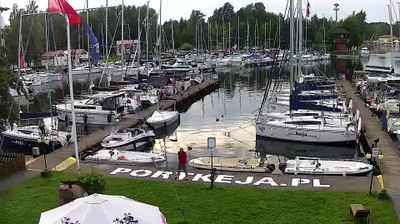
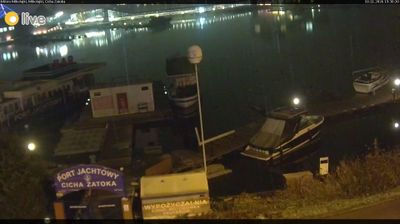


Few cities in the Warmian-Masurian Voivodeship have a history as closely tied to the Prussian military presence as Giżycko. Set on the isthmus between Lake Niegocin and Lake Kisajno, the town is threaded by the Łuczański Canal, part of the interconnected Great Masurian Lakes. The 19th-century Boyen Fortress, built on this strategic strip of land, recalls the period when the town was known as Lötzen in East Prussia. A hand-operated swing bridge across the canal remains a practical local landmark, opening the water route for boats. Trace Giżycko’s place in the Masurian Lakeland by browsing webcams nearby.
4 webcams
Warmian-Masurian Voivodeship combines tranquil lake country with the urban heritage of Warmia in a way that reflects its position between Warmia and Masuria in northeastern Poland. The Great Masurian Lakes form the region’s best-known water network, with Lake Śniardwy the largest lake in Poland. Forests, farmland and waterways spread across a borderland shaped by Polish, German and Prussian histories. In Olsztyn, the former castle of the Warmian chapter is associated with Nicolaus Copernicus, who administered its estates. The regional capital is also a useful starting point for journeys through the lake district and its smaller towns. Browse additional webcams from the surrounding area to extend your view of Warmia and Masuria.
30 webcams
Poland stretches from the Baltic Sea coast in the north to the Carpathian Mountains along its southern frontier, encompassing broad lowlands, lake districts and upland ranges. The Vistula, the country’s longest river, links Kraków and Warsaw before reaching the Baltic near Gdańsk, while the Masurian Lake District is defined by a dense network of lakes. Kraków’s historic centre, including Wawel Castle, recalls Poland’s former royal capital; Warsaw’s rebuilt Old Town speaks to the city’s recovery after the Second World War. The Białowieża Forest preserves one of Europe’s last primeval lowland forests and is home to European bison. Follow how Poland’s regions relate to one another by browsing webcams across the country.
714 webcams