 Frohnhausen: Heunstein
Frohnhausen lies along the Dietzhölze in Hesse’s Lahn-Dill uplands, a setting that has shaped it as a valley settlement below wooded ridges. Heunstein belongs to this rolling upland terrain, where forested slopes meet residential streets and the rural edges of the community. Frohnhausen is a district of Dillenburg, the town associated with William of Orange, who was born there in 1533. The wider Lahn-Dill region is marked by compact settlements between hills, retaining a distinctly small-scale character despite its links with central Hesse’s larger towns.
Generated by AI
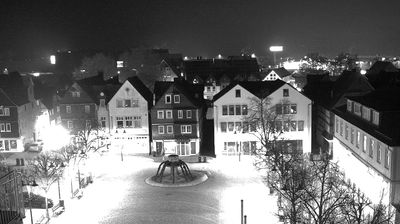



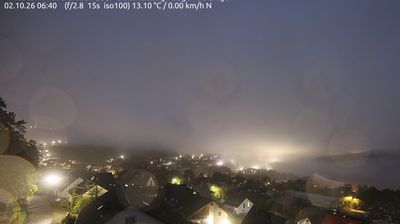

Few communities in Hesse have a history as closely tied to iron-ore mining and metalworking as Frohnhausen. Today a district of Dillenburg in the Lahn-Dill-Kreis, it stands in the Dietzhölze valley alongside the Dietzhölze stream, before it meets the Dill. The settlement forms part of the Lahn-Dill region, where ore extraction, smelting and metalworking long shaped work and settlement patterns. Low wooded uplands of the Rhenish Slate Mountains surround the valley floor, giving this part of Hesse an inland industrial-rural character. Its link with Dillenburg also places it near a town associated with the House of Orange-Nassau. Continue exploring the surrounding area to see how this part of Hesse connects regionally.
1 webcam
Hesse has served as a cultural crossroads within central Germany since the Middle Ages. Its terrain runs from the wooded Taunus and Vogelsberg uplands to the Rhine and Main valleys, while the Lahn, Fulda and Eder shape other parts of the state. Frankfurt am Main provides a metropolitan counterpoint: its Römer city hall complex recalls a long civic tradition, and the Frankfurt Book Fair remains one of the world’s leading publishing events. Farther north, Kassel’s Bergpark Wilhelmshöhe is a UNESCO World Heritage site, noted for its designed landscape and monumental waterworks. Browse other webcams across Hesse to place this setting in a wider central German context.
116 webcams
Germany stretches from the North Sea and Baltic Sea coasts to the Alps on its southern border, encompassing northern plains, river valleys and forested uplands. The Rhine, Danube and Elbe have long connected its regions, while the Black Forest and Bavarian Alps give the south a more dramatic relief. Berlin’s Brandenburg Gate and Museum Island reflect the capital’s role in German history and culture. Cologne Cathedral, a UNESCO World Heritage Site, rises above the Rhine, and the Bauhaus movement, founded in Weimar in 1919, transformed modern design far beyond Germany. Regional cooking, Christmas markets and brewing traditions bring further character to daily life. Browse additional webcams from the surrounding area to extend your view of Germany.
2.1K webcams