 Frejus
Built around a Roman harbour, Fréjus grew into a Mediterranean town on the broad plain of the Argens River, close to France’s Côte d’Azur. Known in antiquity as Forum Julii, it served as an important Roman naval base; the port later silted up, leaving the historic centre inland from the present shoreline. Its Roman amphitheatre, theatre and sections of aqueduct are among the city’s defining remains. The surrounding lowland accommodates the Fréjus airfield, where grass runways, hangars and facilities for light aircraft contrast with denser coastal development. Beyond the town, the Maures massif begins to the southwest, while the Estérel rises along the coast to the northeast.
Generated by AI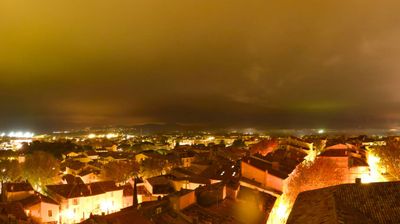

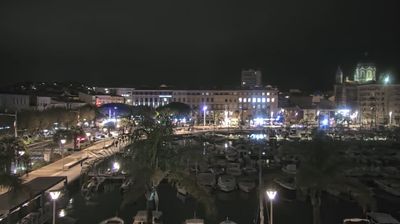

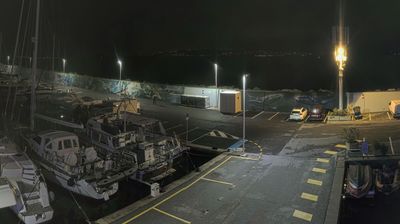

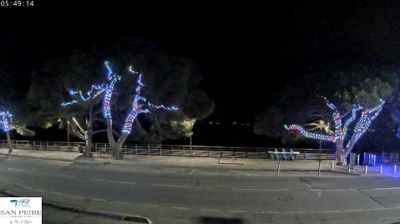
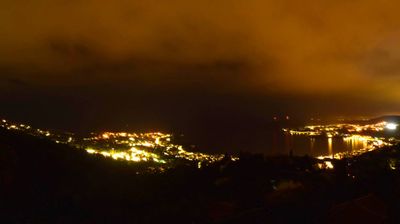

Fréjus straddles the Reyran valley in Provence-Alpes-Côte d’Azur, its opening toward the Mediterranean helping shape a settlement developed by the Romans as Forum Julii. The town preserves an exceptional group of Roman monuments: an amphitheatre, theatre, aqueduct remains and a monumental gate trace the scale of this former naval base. The Romanesque Saint-Léonce Cathedral stands beside a late-antique baptistery in the old centre. Beyond the historic core, Fréjus reaches the coast near the Esterel Massif, whose red rock slopes distinguish this stretch of the French Riviera. Explore nearby webcam locations that provide complementary perspectives on Fréjus and the Esterel coast.
2 webcams
Provence-Alpes-Côte d’Azur occupies France’s southeastern Mediterranean coast and Alpine borderlands. Its terrain runs from the Rhône delta and the Camargue wetlands to the limestone coves of the Calanques and the high valleys of the French Alps, while the Côte d’Azur forms its celebrated shoreline. Marseille, France’s oldest city, is a major port, and Avignon’s Palais des Papes recalls the 14th-century papal court. Inland, Provençal markets, olive cultivation and lavender-growing areas remain central to regional identity. Browse additional webcams nearby to see how Provence-Alpes-Côte d’Azur connects with the Mediterranean, the Alps and neighbouring Italy.
269 webcams
The Atlantic and Mediterranean coastlines, together with the Alps, Pyrenees and broad river basins, define much of France — they support maritime trade, farming, wine regions and travel throughout the year. The Seine runs through Paris, where the Eiffel Tower and the Louvre are among Europe’s most recognised landmarks. The Loire Valley is known for Renaissance châteaux, while Mont-Saint-Michel rises from a tidal bay in Normandy. Regional food traditions are equally distinctive, from Breton seafood to Provençal cooking, with bread, cheese and wine central to everyday life. France’s global cultural influence is evident in its language, literature, fashion and cinema. View additional webcams nearby to better understand how France’s coasts, plains and mountain borders relate to their surroundings.
2.2K webcams