 Flaine: Le Grand Massif
Among the resorts of the French Alps, Flaine stands out for its purpose-built modernist architecture. Set in a high mountain basin of Haute-Savoie, it was created in the 1960s as a ski resort rather than evolving from an older settlement. Bauhaus-trained architect Marcel Breuer designed the central buildings in a distinctive concrete style, while Flaine’s founders commissioned public artworks by Pablo Picasso, Jean Dubuffet and Victor Vasarely. The resort belongs to the Grand Massif ski area, linking it with neighbouring mountain centres. Limestone rock faces and open alpine slopes surround its compact core, making Flaine one of the most unconventional planned resorts in the French Alps.
Generated by AI
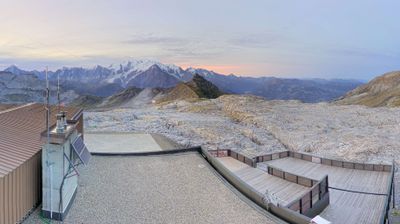
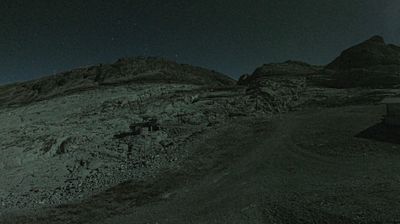
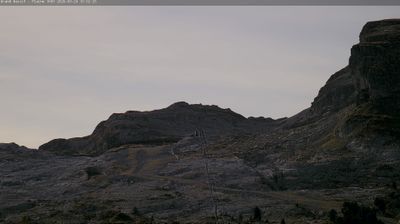
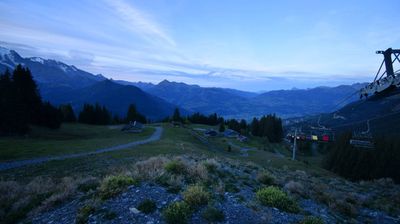
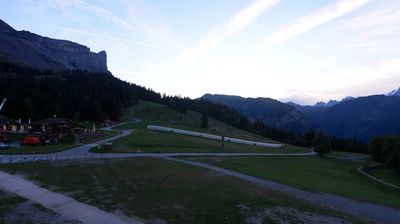

Flaine sits beneath the Grandes Platières in Haute-Savoie, France, where a purpose-built resort occupies a broad alpine bowl at about 1,600 metres. Created in the 1960s, it forms part of the Grand Massif ski area, with lifts connecting its slopes to Les Carroz, Morillon, Samoëns and Sixt. Flaine stands apart from many French resorts through its modernist concrete architecture, designed largely by Bauhaus-trained architect Marcel Breuer. Works of public art, including a sculpture by Jean Dubuffet, add a cultural dimension to its pedestrian centre. In summer, the surrounding limestone terrain supports hiking and climbing. See how Flaine relates to the Grand Massif and Haute-Savoie by browsing webcams nearby.
4 webcams
Auvergne-Rhône-Alpes is widely known in France for the French Alps, the major mountain chain along its eastern edge. This vast administrative region also extends west across the Massif Central and follows the Rhône valley, bringing together volcanic uplands, river corridors and major cities. Lyon, the regional capital, stands between the Rhône and Saône, and its historic centre is inscribed on UNESCO’s World Heritage List. Near these coordinates, northern Ardèche lies close to the wooded hills of the Pilat area, where the Rhône corridor forms a transition between upland country and valley settlements. Alpine cheeses and Rhône valley wines reflect the region’s varied terrain. Browse additional webcams from the surrounding area to extend your view of Auvergne-Rhône-Alpes.
764 webcams
The Atlantic and Mediterranean coastlines, together with the Alps, Pyrenees and broad river basins, define much of France — they support maritime trade, farming, wine regions and travel throughout the year. The Seine runs through Paris, where the Eiffel Tower and the Louvre are among Europe’s most recognised landmarks. The Loire Valley is known for Renaissance châteaux, while Mont-Saint-Michel rises from a tidal bay in Normandy. Regional food traditions are equally distinctive, from Breton seafood to Provençal cooking, with bread, cheese and wine central to everyday life. France’s global cultural influence is evident in its language, literature, fashion and cinema. View additional webcams nearby to better understand how France’s coasts, plains and mountain borders relate to their surroundings.
2.2K webcams