 Fichtelberg: Ochsenkopf - Ochsenkopf Sendemast, Berstation Südbahn

Fichtelberg has served as an iron-mining centre in Bavaria’s Fichtel Mountains since the early 17th century. The town lies on the range’s eastern side, amid forested uplands, granite formations and high moorland. Above it rises Ochsenkopf, at 1,024 metres the second-highest summit in the Fichtelgebirge and a focal point for cable cars, marked walking routes and winter sports. Mining and ironworking shaped Fichtelberg for centuries; the German Steam Locomotive Museum preserves part of this industrial heritage. Broad ridges and dense conifer woods give this northeastern corner of Bavaria a distinctly upland character.
Generated by AI
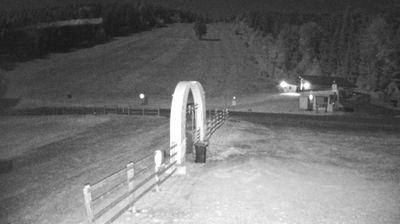



Fichtelberg straddles the upper Fichtelnaab in Bavaria’s Fichtel Mountains, where forest and iron ore once made mining and ironworking central to local life. The municipality sits below Ochsenkopf, one of the range’s best-known summits, in an upland region marked by dense woods, winter sports and long-distance trails. Its Gleißinger Fels visitor mine preserves part of this industrial past: iron ore was extracted here for centuries, and the site introduces the techniques and working conditions behind the trade. Traditional glassmaking and granite working also belong to the wider Fichtelgebirge heritage. Discover how Fichtelberg connects with the Ochsenkopf area and the rest of the Fichtel Mountains by browsing webcams nearby.
2 webcams
Built around the early medieval Duchy of Bavaria, Bavaria grew into Germany’s largest federal state. The Danube crosses its broad centre, while the Bavarian Alps form its southern edge and include the Zugspitze, Germany’s highest mountain. Munich is the state capital and the home of Oktoberfest, a festival rooted in an 1810 royal wedding. Beyond the metropolis, Franconia’s vineyards, Swabian towns and Alpine resorts reveal how varied this part of Germany can be. Browse additional webcams from the surrounding area to extend your view of Bavaria.
861 webcams
Germany stretches from the North Sea and Baltic Sea coasts to the Alps on its southern border, encompassing northern plains, river valleys and forested uplands. The Rhine, Danube and Elbe have long connected its regions, while the Black Forest and Bavarian Alps give the south a more dramatic relief. Berlin’s Brandenburg Gate and Museum Island reflect the capital’s role in German history and culture. Cologne Cathedral, a UNESCO World Heritage Site, rises above the Rhine, and the Bauhaus movement, founded in Weimar in 1919, transformed modern design far beyond Germany. Regional cooking, Christmas markets and brewing traditions bring further character to daily life. Browse additional webcams from the surrounding area to extend your view of Germany.
2.7K webcams