 Demmin
The landscape around Demmin is defined by low river plains and mature deciduous woodland, which has shaped both the built environment and local life. The town stands at the confluence of the Peene, Tollense and Trebel rivers in Mecklenburg-Vorpommern, a setting that long supported trade and river transport. Demmin developed as a medieval settlement and belonged to the Hanseatic League. Its centre retains Brick Gothic character, notably at St Bartholomaei Church, while the surrounding waterways and green corridors give the town a notably open, northern German character.
Generated by AI


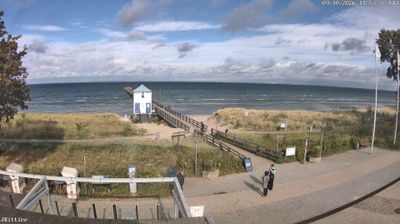

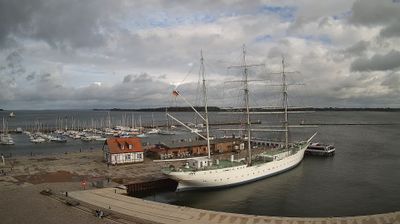
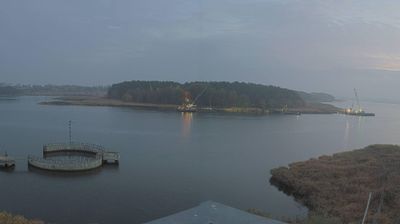

Demmin has served as a Hanseatic trading town in Pomerania since the Middle Ages. It stands where the Peene, Tollense and Trebel meet, a waterside setting that long connected the town with the Baltic hinterland. Brick Gothic shapes the historic centre, most notably St Bartholomaei Church, whose tall tower is a familiar marker above the streets. The surrounding Peene valley belongs to a lowland region of meadows, woodland and waterways, while the town retains the measured scale of a small northeastern German centre. Continue through nearby webcams to explore different parts of Demmin and the Peene valley.
5 webcams
Mecklenburg-Vorpommern is best known within Germany for its Baltic Sea coastline, including the islands of Rügen and Usedom. Its northern edge meets the Baltic, while the interior is marked by lakes, lowland forests and farmland; Lake Müritz is Germany’s largest lake lying entirely within the country. The white chalk cliffs of Jasmund National Park on Rügen are among the state’s defining coastal formations. Stralsund and Wismar retain historic Hanseatic town centres, both inscribed on UNESCO’s World Heritage List. Ports, seaside resorts and lake districts give the region a distinctly northern character. Continue with other webcams from the area to see how this part of northeastern Germany connects regionally.
106 webcams
Germany stretches from the North Sea and Baltic Sea coasts to the Alps on its southern border, encompassing northern plains, river valleys and forested uplands. The Rhine, Danube and Elbe have long connected its regions, while the Black Forest and Bavarian Alps give the south a more dramatic relief. Berlin’s Brandenburg Gate and Museum Island reflect the capital’s role in German history and culture. Cologne Cathedral, a UNESCO World Heritage Site, rises above the Rhine, and the Bauhaus movement, founded in Weimar in 1919, transformed modern design far beyond Germany. Regional cooking, Christmas markets and brewing traditions bring further character to daily life. Browse additional webcams from the surrounding area to extend your view of Germany.
2.7K webcams