 Campan: Lac de Payolle
Campan has served as a pastoral settlement in the Bigorre Pyrenees since the Middle Ages. Lac de Payolle lies in the commune’s upland territory, where a lake is ringed by conifer woodland and rounded Pyrenean slopes. It forms part of the Payolle area, a broad mountain pasture between the valleys of Campan and Aure, near the Col d’Aspin. Campan is also associated with its mounaques: life-size cloth figures displayed in the village, a local tradition that brings everyday scenes and characters into the streets. The lake and its wooded margins give this corner of Occitanie a distinctly rural character beside the higher mountain routes.
Generated by AI
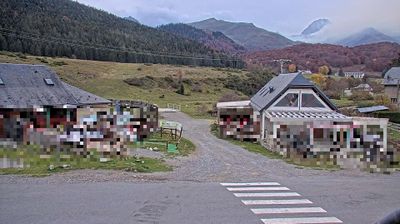


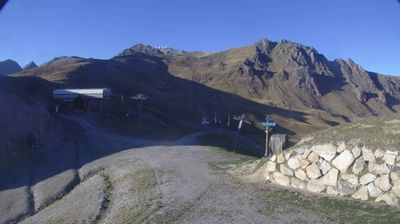

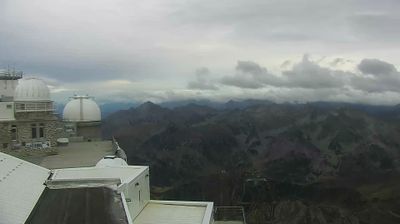

Campan straddles the upper Adour valley in the central Pyrenees of Occitania, and its position at the meeting of mountain roads has shaped it as a stop between high passes. Routes from the commune lead towards the Col du Tourmalet and Col d’Aspin, climbs repeatedly written into the history of the Tour de France. Stone farmhouses and pastureland reflect the working landscape of Bigorre rather than a purpose-built resort. In summer, the Mounaques de Campan—large straw-stuffed figures staged in the village streets—bring a distinctly local note to the season. Continue with other webcams from the area to see how this part of the central Pyrenees connects regionally.
3 webcams
Occitania occupies a broad southern belt in France, extending from the Massif Central and the Pyrenees to the Mediterranean coast. These coordinates lie in the inland Haut-Languedoc area, where wooded hills and reservoirs around the upper Agout contrast with coastal plains farther east. Toulouse, the regional capital, stands on the Garonne and is associated with the Canal du Midi, a 17th-century waterway linking the city with the Mediterranean and listed as a UNESCO World Heritage Site since 1996. Roman sites, fortresses connected with the Cathar past, and the Occitan language tradition reveal the many layers of southern French identity. Continue through nearby webcams to explore different parts of Occitania.
214 webcams
The Atlantic and Mediterranean coastlines, together with the Alps, Pyrenees and broad river basins, define much of France — they support maritime trade, farming, wine regions and travel throughout the year. The Seine runs through Paris, where the Eiffel Tower and the Louvre are among Europe’s most recognised landmarks. The Loire Valley is known for Renaissance châteaux, while Mont-Saint-Michel rises from a tidal bay in Normandy. Regional food traditions are equally distinctive, from Breton seafood to Provençal cooking, with bread, cheese and wine central to everyday life. France’s global cultural influence is evident in its language, literature, fashion and cinema. View additional webcams nearby to better understand how France’s coasts, plains and mountain borders relate to their surroundings.
2.2K webcams