 Burgos: Burgos Cathedral
The landscape around Burgos is defined by the open, elevated Castilian plateau and the Arlanzón River, which have shaped both the built environment and local life. At its historic centre, Burgos Cathedral dominates Plaza de Santa María with limestone façades, tracery and slender spires. Construction began in 1221, and the church became a UNESCO World Heritage Site in 1984; it is regarded as a major work of Spanish Gothic architecture. The cathedral also contains the tomb of El Cid and his wife Jimena. Burgos stands on the Camino Francés, the principal Spanish route of the pilgrimage to Santiago de Compostela, and its centre has long served travellers crossing northern Castile.
Generated by AI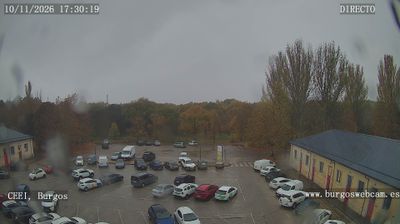

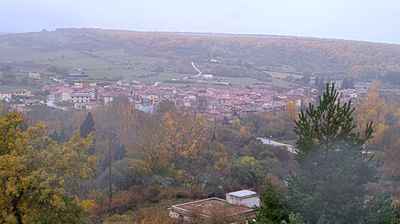

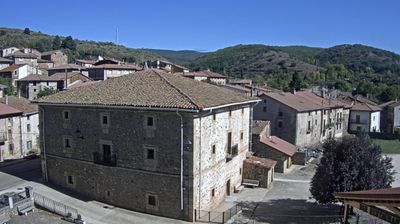
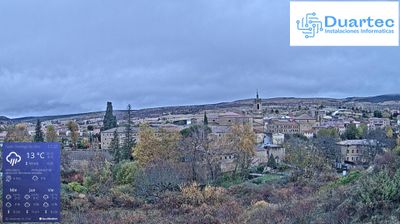

Burgos lies along the Arlanzón River, on the northern edge of Spain’s Meseta, where the broad Castilian plateau surrounds a compact historic centre. Its Gothic Cathedral of Saint Mary, begun in 1221 and listed as a UNESCO World Heritage Site, dominates the old city with its elaborate spires and richly carved façades. Burgos is also an important stop on the Camino de Santiago’s French Way, while the Museum of Human Evolution presents discoveries from the nearby Atapuerca archaeological sites. Continue with other webcams from the area to see how this part of Castile and León connects across northern Spain.
2 webcams
The Duero River and the high Castilian plateau define much of Castile and León – their wide plains have long supported cereal farming, vineyards and historic market towns. Spain’s largest autonomous community extends from the Cantabrian Mountains toward Portugal, with nine provinces linked by long roads, rail lines and regional capitals. Salamanca’s university, founded in 1218, ranks among Europe’s oldest, while Burgos Cathedral and Segovia’s Roman aqueduct point to the area’s medieval and Roman past. The Camino de Santiago also crosses its northern provinces, bringing a continuing pilgrimage tradition to towns along the route. Browse other webcams across Castile and León to place this setting in a wider geographic context.
47 webcams
Spain extends from the Cantabrian coast to the Canary Islands, encompassing Atlantic shores, Mediterranean beaches and the broad interior Meseta. The Pyrenees form its northeastern frontier, while the Guadalquivir crosses Andalusia on its way to the Atlantic. Madrid anchors the country’s political and cultural life, but distinct regional identities are central to Spain’s character: Catalonia, the Basque Country, Galicia and Andalusia each have their own languages or strong local traditions. Granada’s Alhambra is a major monument of the medieval Nasrid dynasty, and Santiago de Compostela remains the destination of the Camino de Santiago. Browse related webcams around the Iberian Peninsula to build a fuller picture of Spain.
1.4K webcams