 Arvier: Aosta Comune
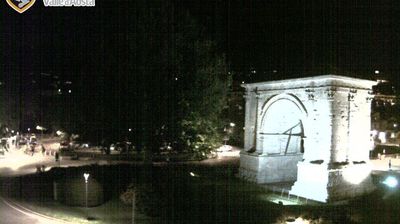
Aosta combines Roman continuity with an Alpine setting in a way that reflects its position in the Dora Baltea valley. Piazza Chanoux forms the civic heart of the regional capital, framed by arcaded 19th-century buildings and the neoclassical Hôtel de Ville. The city began as the Roman colony Augusta Praetoria in 25 BC, and its street grid still leads to the Arch of Augustus, Porta Praetoria and the Roman Theatre. Beyond the square, Aosta’s public life reflects the bilingual Italian–French identity of the autonomous Aosta Valley. The surrounding Alps give this compact city a strong sense of enclosure, while the valley has long served as a route between Italy, France and Switzerland.
Generated by AI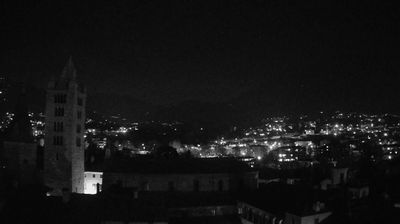

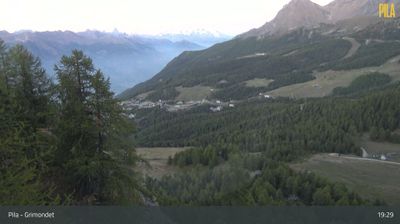


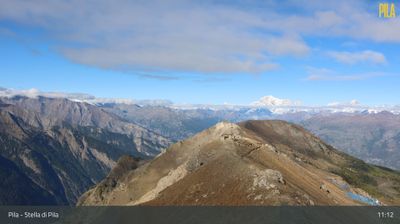
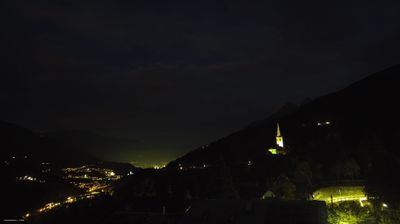

Arvier has served as a wine-growing community in the Aosta Valley since the Middle Ages. Set beside the Dora Baltea, it occupies a narrow Alpine corridor edged by slopes of steep terraced vines. Its best-known red, Enfer d’Arvier, is a DOC wine produced chiefly from the local Petit Rouge grape; its name, meaning “hell”, alludes to the heat held by the sun-facing terraces. The remains of the medieval La Mothe castle overlook the settlement, while the valley’s road and railway trace the river towards Aosta and the upper valley. Move on to other webcams in the Aosta Valley to compare Alpine valleys and vineyard settings around Arvier.
1 webcam
The terrain of Aosta Valley ranges from the broad Dora Baltea valley floor around Aosta to glaciated Alpine massifs along its French and Swiss borders, creating sharp changes in altitude and climate. Italy’s smallest region is framed by some of the Alps’ best-known high mountain country, including the Mont Blanc area and Gran Paradiso National Park. Aosta preserves the legacy of the Roman town of Augusta Praetoria in its city walls, Porta Praetoria and Roman Theatre. Stone villages, alpine pastures and fortified castles reflect a culture shaped by mountain routes and French-Italian influences; Fontina cheese is among its established local specialities. Discover other points of interest through webcams located across Aosta Valley.
77 webcams
Among the countries of southern Europe, Italy stands out for its Mediterranean coastline and cities marked by the legacy of ancient Rome. The Alps form its northern frontier, while the Apennines run down the peninsula and the Po crosses the broad plain of the north. Rome’s Colosseum and Roman Forum recall the ancient empire; Florence is closely associated with the Renaissance, and Venice is built across a lagoon on the Adriatic. Food changes markedly between regions, from olive-oil cooking in the south to rice dishes in the Po Valley. Sicily and Sardinia add distinct island identities to a country whose regions retain strong local character. Explore nearby webcam locations that provide complementary perspectives on Italy’s coasts, cities and mountains.
3K webcams