 Ankaran: R2-406, Škofije - Lazaret, Lazaret
Ankaran has served as a coastal settlement in Slovenian Istria since the Middle Ages. It lies on the Gulf of Trieste between Koper and the Italian border. Low hills behind its built-up coast are cultivated with vineyards and olive groves, while the Lazaret area connects the settlement with nearby Muggia in Italy. Ankaran developed around a Benedictine monastery founded in the 12th century. Its territory also includes Debeli rtič, a protected headland marked by flysch cliffs and Mediterranean vegetation. This compact community combines everyday cross-border connections with the farmed terrain characteristic of Slovenian Istria.
Generated by AI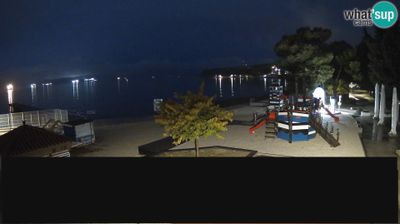
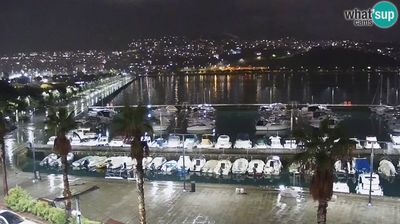



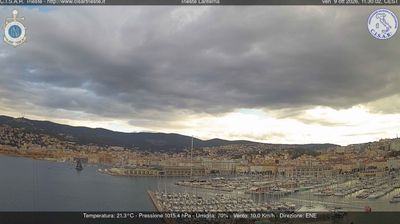
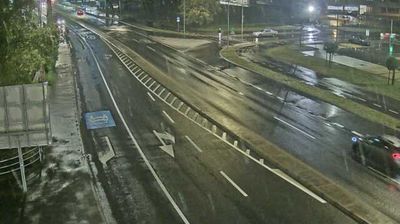

Ankaran has served as a coastal settlement on Slovenia’s Adriatic shore since Roman times. Set on the Bay of Koper, it occupies part of the country’s short coastline between the Italian border and the port city of Koper. The town is associated with the former Benedictine monastery of St Nicholas, whose buildings now form the Hotel Convent complex. Nearby, the Debeli Rtič headland is protected for its coastal habitats, while vineyards and olive groves underline the area’s Mediterranean character. Ankaran belongs to Slovenian Istria, a region shaped by Adriatic trade and the meeting of Slovene and Italian cultural influences. View additional webcams nearby to better understand how Ankaran relates to Slovenia’s Adriatic coast.
2 webcams
Upravna enota Koper combines a Mediterranean shoreline with a limestone hinterland in a way that reflects its position between the Adriatic Sea and Slovenia’s interior. Centred on Koper, it forms part of Slovenian Istria on the Gulf of Trieste, where the Bay of Koper meets low hills marked by vineyards and olive groves. The old town bears the imprint of centuries of Venetian rule: Tito Square is framed by the Praetorian Palace and the Cathedral of the Assumption. Koper is also Slovenia’s principal commercial port, lending this short stretch of coast a working, outward-looking character alongside its Italianate urban fabric. Browse other webcams across Slovenian Istria to place this coastal setting in a wider geographic context.
18 webcams
Slovenia occupies a meeting point of the Alps, the Pannonian Plain, the Dinaric mountains and the Adriatic coast in south-central Europe. The Julian Alps rise in the northwest, where Triglav is the country’s highest mountain, while the Soča River is known for its clear turquoise water. Karst terrain has shaped caves such as Postojna Cave and the Škocjan Caves, a UNESCO World Heritage site. Ljubljana combines a riverside old town with works by architect Jože Plečnik; farther east, wine-growing regions and thermal springs add another dimension. Slovenian food reflects Alpine, Mediterranean and Balkan influences. Find related webcams in the surrounding area to build a fuller picture of Slovenia and the northern Adriatic.
782 webcams