 Fosse: Skjelingavatnet
The highland landscape of Vestland defines the setting of Fosse — steep slopes, woodland and settled valley ground give this small Norwegian locality a strongly rural character. It belongs to the mountainous interior of western Norway, where communities are shaped by narrow corridors of usable land rather than by dense urban development. Fosse is part of Vestland, the county formed in 2020 through the merger of Hordaland and Sogn og Fjordane. The wider region is marked by transitions between farmed pockets, forest and higher ground, making settlement patterns and local roads an essential part of its identity. Fosse represents the quieter inland side of a county more often associated with Norway’s coast and fjords.
Generated by AI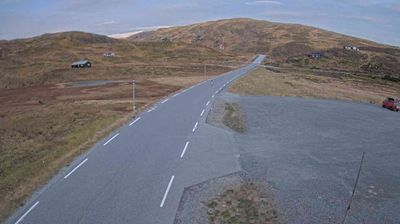
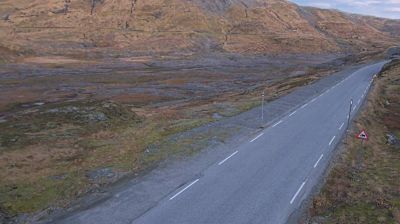



Among the regions of Norway, Vestland stands out for fjords that cut deep into a coast backed by high mountains. Sognefjord, Norway’s longest and deepest fjord, reaches far inland, while Hardangerfjord is closely associated with orchards and spring blossom. The county extends from wave-battered islands and sheltered coastal communities to valleys, waterfalls and upland terrain. Bergen, Vestland’s largest city, developed as a Hanseatic trading centre; its wooden Bryggen wharf is a UNESCO World Heritage site. Maritime life, mountain routes and farming communities meet here. Browse other webcams across Vestland to place this fjord country in a wider geographic context.
232 webcams
Norway has served as a seafaring link between the North Atlantic and northern Europe since the Viking Age. Its long coastline is cut by fjords, while the Lofoten archipelago rises sharply from the Norwegian Sea and the mountains of Jotunheimen include Galdhøpiggen, Norway’s highest peak. Bergen’s Bryggen, the former Hanseatic wharf, recalls centuries of maritime trade. Farther north, Sámi culture remains an essential part of the country’s identity. Explore nearby webcam locations that provide complementary perspectives on Norway’s coast, fjords and mountain regions.
1.5K webcams