 Lloret de Mar: Platja d'en Sitre - Castell de Sant Joan - Playa de Fenals
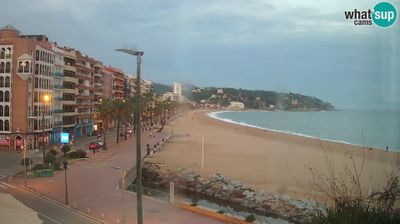
Among the resorts of Catalonia’s Costa Brava, Lloret de Mar stands out for its urban shoreline beneath the medieval Castell de Sant Joan. The town faces the Mediterranean Sea on a rugged stretch of coast where headlands divide the main waterfront from Playa de Fenals; Platja d'en Sitre is another named section of this shore. Castell de Sant Joan occupies the hill between Lloret and Fenals. Its origins date to the 11th century, when the fortress formed part of the coastal defence of this part of Catalonia. Today, Lloret combines a dense resort centre with pine-covered slopes and small coves characteristic of the Costa Brava.
Generated by AI
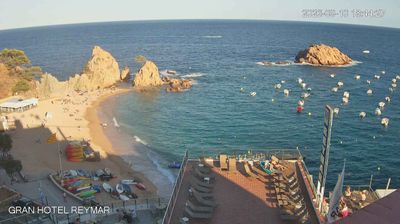
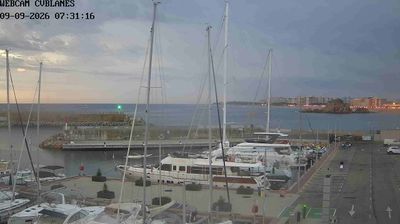
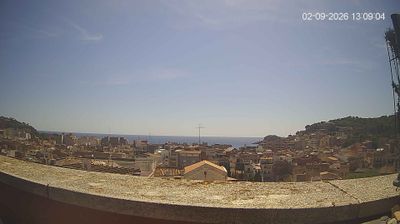
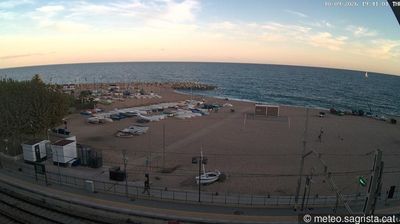
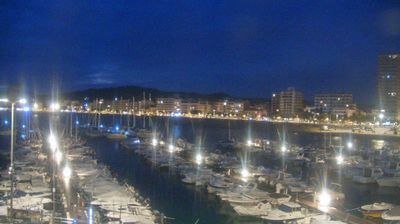


Few towns in Catalonia have a history as closely tied to seafaring and transatlantic trade as Lloret de Mar. Set on the Mediterranean coast of the Costa Brava, it developed from a fishing settlement into a port whose sailors and merchants travelled to the Americas in the 18th and 19th centuries. The Museu del Mar, housed in the former Can Garriga residence, documents this maritime chapter. Inland from the beaches, the parish church of Sant Romà combines a 16th-century Gothic structure with later colourful decoration, while the Santa Clotilde Gardens look out over the coast from a cliffside setting. Explore nearby webcam locations that provide complementary perspectives on Lloret de Mar and the Costa Brava.
3 webcams
Catalonia combines Mediterranean ease with rugged inland terrain in a way that reflects its position between the Pyrenees and Spain’s eastern coast. In northeastern Spain, the region extends from the coves of the Costa Brava to high mountain valleys and the Ebro Delta. Barcelona is its largest city and cultural reference point, known for Antoni Gaudí’s still-unfinished Sagrada Família. Inland, the serrated massif of Montserrat rises near Catalonia’s geographic centre and is home to the Benedictine monastery of Santa Maria de Montserrat. Catalan is co-official with Spanish, and the region’s language, cuisine and traditions give everyday life a distinct identity. Discover how Catalonia connects with the Pyrenees, coast and neighbouring regions by browsing webcams nearby.
272 webcams
Spain extends from the Cantabrian coast to the Canary Islands, encompassing Atlantic shores, Mediterranean beaches and the broad interior Meseta. The Pyrenees form its northeastern frontier, while the Guadalquivir crosses Andalusia on its way to the Atlantic. Madrid anchors the country’s political and cultural life, but distinct regional identities are central to Spain’s character: Catalonia, the Basque Country, Galicia and Andalusia each have their own languages or strong local traditions. Granada’s Alhambra is a major monument of the medieval Nasrid dynasty, and Santiago de Compostela remains the destination of the Camino de Santiago. Browse related webcams around the Iberian Peninsula to build a fuller picture of Spain.
1.4K webcams