 Goslar: UNESCO-Weltkulturerbe -

Few places in Lower Saxony have a history as closely tied to silver mining as Goslar. On the northern edge of the Harz Mountains, the town developed beside the Rammelsberg, whose ore deposits were worked for roughly a millennium. Goslar’s medieval prosperity helped make it an important imperial centre: the 11th-century Imperial Palace was a favoured residence of Holy Roman emperors. The UNESCO-listed Old Town retains a dense ensemble of timber-framed houses, civic buildings and churches, while the former Rammelsberg mine preserves the industrial side of that long relationship with the mountain. The Harz foothills begin immediately south of the historic core.
Generated by AI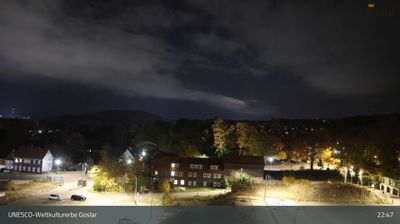
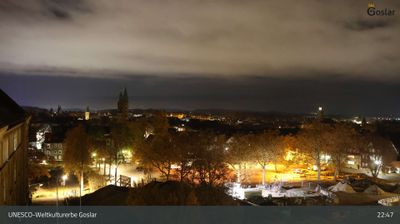
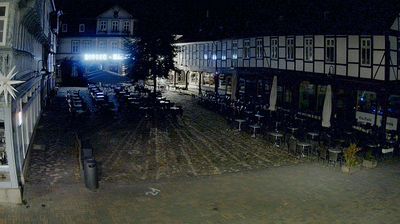
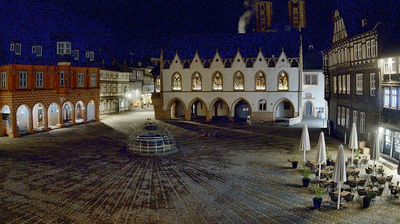

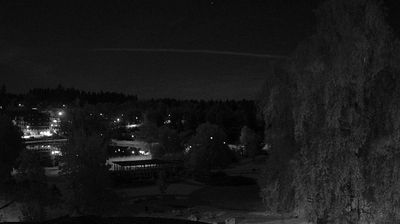

Goslar occupies the northern foothills of the Harz Mountains in Lower Saxony. For centuries, silver, copper and lead from nearby Rammelsberg underpinned the town’s wealth and the authority of the Holy Roman emperors who gathered here. The 11th-century Kaiserpfalz, or Imperial Palace, recalls that role, while the timber-framed streets of the Old Town preserve an urban fabric shaped by trade and mining. Goslar’s Old Town and the Rammelsberg Mines have been inscribed together on UNESCO’s World Heritage List since 1992. Forested Harz slopes rise south of the historic centre, giving this former imperial town a distinctly upland setting. Browse other webcams across Lower Saxony to place this setting in a wider geographic context.
11 webcams
Lower Saxony extends from the North Sea coast to the Harz Mountains, encompassing Wadden Sea mudflats, broad lowlands and wooded uplands. At its northern edge, the Lower Saxon Wadden Sea forms part of the UNESCO-listed Wadden Sea, shaped twice daily by the tides. The Weser crosses the state on its way to the North Sea, while the Elbe marks much of its northeastern border. Inland, the Lüneburg Heath is associated with heather moorland and long-standing sheep farming. Hanover, the state capital, is known for the Herrenhausen Gardens, whose Great Garden is a major baroque ensemble. Explore further webcams across Lower Saxony to place the region in its wider geographic context.
198 webcams
Germany stretches from the North Sea and Baltic Sea coasts to the Alps on its southern border, encompassing northern plains, river valleys and forested uplands. The Rhine, Danube and Elbe have long connected its regions, while the Black Forest and Bavarian Alps give the south a more dramatic relief. Berlin’s Brandenburg Gate and Museum Island reflect the capital’s role in German history and culture. Cologne Cathedral, a UNESCO World Heritage Site, rises above the Rhine, and the Bauhaus movement, founded in Weimar in 1919, transformed modern design far beyond Germany. Regional cooking, Christmas markets and brewing traditions bring further character to daily life. Browse additional webcams from the surrounding area to extend your view of Germany.
2.8K webcams