 Quedlinburg: Marktkirche St. Benedikti, Stiftskirche St. Servatii

Few places in Saxony-Anhalt have a history as closely tied to the Ottonian dynasty as Quedlinburg. Set on the Bode at the northern edge of the Harz, the town developed around a royal palatinate established by Henry I in the 10th century. The hilltop Collegiate Church of St Servatius recalls that early medieval court, while the Market Church of St Benedict stands at the heart of the old commercial centre. More than 2,000 half-timbered houses, some dating from the 16th century, form a UNESCO World Heritage ensemble with the castle hill and historic old town. Red-tiled roofs and church spires give Quedlinburg a compact Central German townscape, framed by the Harz foothills.
Generated by AI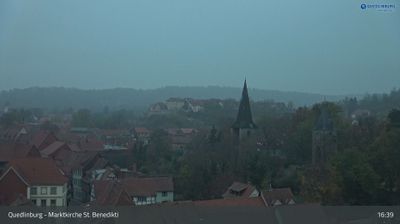
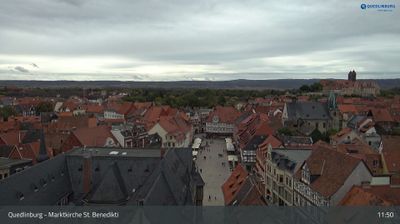
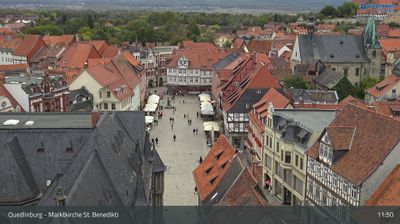
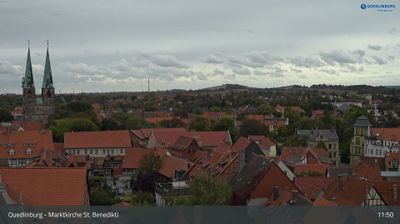
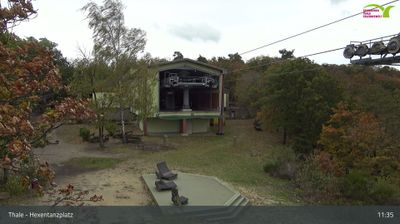
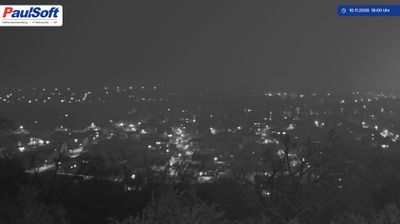
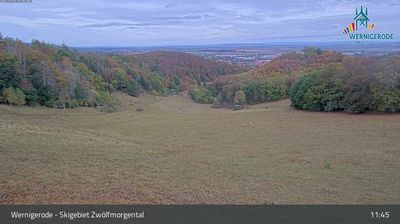
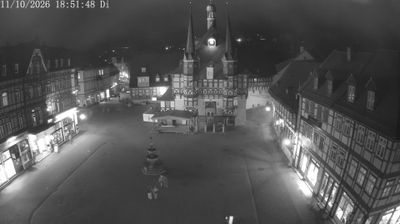


The landscape around Quedlinburg is defined by the northern foothills of the Harz and the Bode River, which have shaped both the town’s form and local economy. The compact historic centre forms part of a UNESCO World Heritage property, recognised for its exceptional concentration of timber-framed houses spanning eight centuries. Above the streets, the Schlossberg holds the Collegiate Church of St Servatius and the former Quedlinburg Abbey, founded in the 10th century and long an important medieval institution. Market Square, surrounded by historic facades, remains the civic heart of the old town. View additional webcams nearby to better understand how Quedlinburg and the Harz foothills relate to their surroundings.
5 webcams
Among the regions of Germany, Saxony-Anhalt stands out for its exceptional Romanesque heritage and the broad Elbe lowlands around Magdeburg. The Elbe crosses the state from south-east to north-west, while the Harz forms its mountainous south-western edge. Magdeburg, the state capital, is marked by its medieval cathedral and an important role in the Holy Roman Empire. Further south, the Bauhaus buildings in Dessau are a defining chapter of modern architecture, and Quedlinburg’s historic centre is recognised by UNESCO. Vineyards along the Saale and Unstrut add another distinct facet to the region. Move on to other webcams in the region to compare landscapes and settings around Saxony-Anhalt.
40 webcams
Germany stretches from the North Sea and Baltic Sea coasts to the Alps on its southern border, encompassing northern plains, river valleys and forested uplands. The Rhine, Danube and Elbe have long connected its regions, while the Black Forest and Bavarian Alps give the south a more dramatic relief. Berlin’s Brandenburg Gate and Museum Island reflect the capital’s role in German history and culture. Cologne Cathedral, a UNESCO World Heritage Site, rises above the Rhine, and the Bauhaus movement, founded in Weimar in 1919, transformed modern design far beyond Germany. Regional cooking, Christmas markets and brewing traditions bring further character to daily life. Browse additional webcams from the surrounding area to extend your view of Germany.
2.8K webcams