 Schliersee: Spitzingsee

Few places in Bavaria have a history as closely tied to monastic settlement and Alpine farming as Schliersee. The market town lies in the Bavarian Alps beside Lake Schliersee, while the smaller Lake Spitzingsee sits farther south among higher slopes and forest. Schliersee developed around a Benedictine monastery, an origin that still distinguishes this Upper Bavarian community. Above Spitzingsee, mountain pastures, walking routes and lift infrastructure shape the ridges of an established mountain-sports area. The setting combines working alpine meadows with close-set villages and wooded hills rising above the lakes.
Generated by AI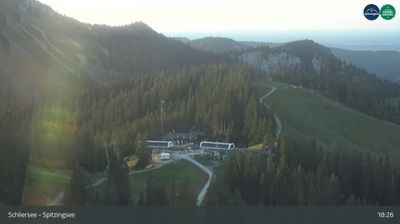
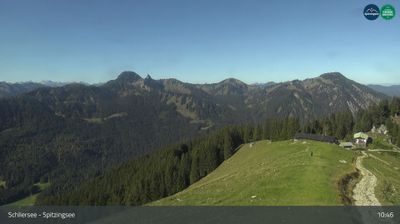
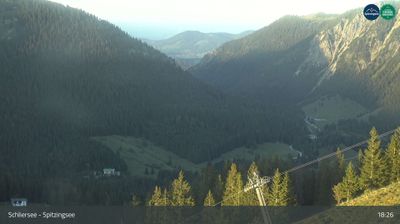
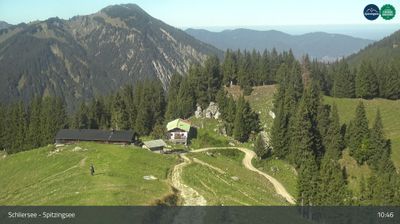
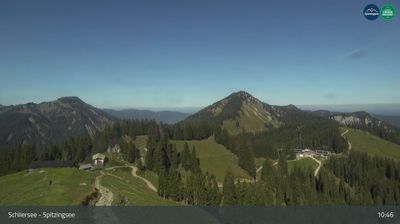


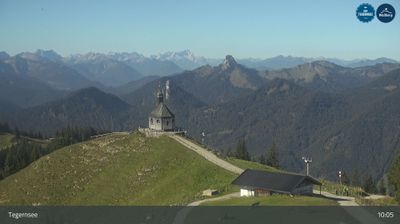
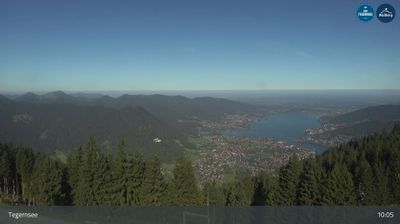
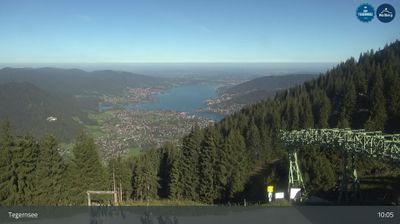

Lake Schliersee defines the setting of Schliersee — its broad shoreline and surrounding Bavarian Prealps shape a resort town where waterside walks, sailing and mountain excursions are part of the local rhythm. The settlement lies in Upper Bavaria, south of Munich, with wooded slopes and Alpine peaks close at hand. Schliersee has long been connected by rail to Munich, making it a familiar weekend destination as well as a year-round base for outdoor pursuits. In the Neuhaus district, the Markus Wasmeier Open-Air Museum preserves historic rural buildings from Upper Bavaria and documents regional crafts and domestic life. Continue through nearby webcams to explore different parts of Schliersee and the Bavarian Alps.
8 webcams
Built around the early medieval Duchy of Bavaria, Bavaria grew into Germany’s largest federal state. The Danube crosses its broad centre, while the Bavarian Alps form its southern edge and include the Zugspitze, Germany’s highest mountain. Munich is the state capital and the home of Oktoberfest, a festival rooted in an 1810 royal wedding. Beyond the metropolis, Franconia’s vineyards, Swabian towns and Alpine resorts reveal how varied this part of Germany can be. Browse additional webcams from the surrounding area to extend your view of Bavaria.
867 webcams
Germany stretches from the North Sea and Baltic Sea coasts to the Alps on its southern border, encompassing northern plains, river valleys and forested uplands. The Rhine, Danube and Elbe have long connected its regions, while the Black Forest and Bavarian Alps give the south a more dramatic relief. Berlin’s Brandenburg Gate and Museum Island reflect the capital’s role in German history and culture. Cologne Cathedral, a UNESCO World Heritage Site, rises above the Rhine, and the Bauhaus movement, founded in Weimar in 1919, transformed modern design far beyond Germany. Regional cooking, Christmas markets and brewing traditions bring further character to daily life. Browse additional webcams from the surrounding area to extend your view of Germany.
2.8K webcams