 Noto
Noto has served as a civic centre in southeastern Sicily since the early 18th century. Rebuilt on a new site after the earthquake of 1693, it became one of the defining towns of the Val di Noto, a UNESCO-listed group of late-Baroque settlements in south-eastern Sicily. Its centre is marked by honey-coloured limestone streets, palaces and churches, including the Cathedral of San Nicolò. Beyond the town, the land opens across the southern edge of the Hyblaean Plateau toward olive groves, almond orchards and the Mediterranean coast. Noto’s territory also includes the Vendicari Nature Reserve, a protected stretch of wetlands and shoreline.
Generated by AI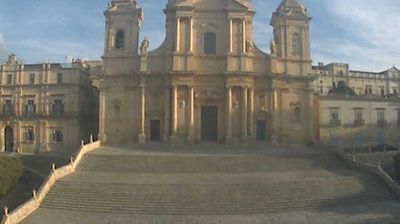

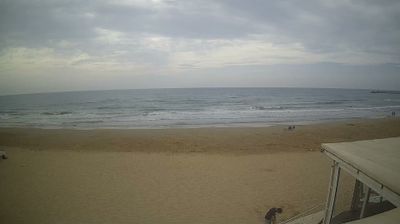




Noto, rebuilt on a plateau after the earthquake of 1693, grew into one of Sicily’s defining late-Baroque towns. Its historic centre forms part of UNESCO’s Late Baroque Towns of the Val di Noto World Heritage site, shaped by the reconstruction of south-eastern Sicily after the disaster. Along Corso Vittorio Emanuele, warm limestone façades lead past the Cathedral of San Nicolò and Palazzo Ducezio, the city hall with its Hall of Mirrors. Noto stands between the Hyblaean uplands and the Ionian coast, and its surrounding countryside is known for almond and citrus cultivation. Move on to other webcams in Sicily to compare landscapes and settings around south-eastern Sicily.
2 webcams
Sicily stretches from the Strait of Messina to Capo Passero, encompassing volcanic highlands, fertile plains and long Mediterranean coasts. Mount Etna, Europe’s highest active volcano, dominates the east, while the island’s interior is marked by cultivated land and hill towns. Off the northern coast lie the volcanic Aeolian Islands. Palermo’s Arab-Norman monuments reflect centuries of Mediterranean exchange, and Agrigento’s Valley of the Temples preserves major remains of the Greek world. Browse additional webcams from the surrounding area to extend your view of Sicily.
106 webcams
Among the countries of southern Europe, Italy stands out for its Mediterranean coastline and cities marked by the legacy of ancient Rome. The Alps form its northern frontier, while the Apennines run down the peninsula and the Po crosses the broad plain of the north. Rome’s Colosseum and Roman Forum recall the ancient empire; Florence is closely associated with the Renaissance, and Venice is built across a lagoon on the Adriatic. Food changes markedly between regions, from olive-oil cooking in the south to rice dishes in the Po Valley. Sicily and Sardinia add distinct island identities to a country whose regions retain strong local character. Explore nearby webcam locations that provide complementary perspectives on Italy’s coasts, cities and mountains.
3.1K webcams