 Schnals - Senales: Vernagt-Stausee
Vernagt-Stausee lies in the Senales Valley, an artificial lake enclosed by the steep high slopes of the Ötztal Alps. It is a defining landmark of Schnals–Senales, a South Tyrolean valley extending north towards the Austrian border. The reservoir was created in the 1950s for hydroelectric power, transforming land around the former settlement of Vernago. Roads and farmsteads trace its shore, while the upper valley continues into the glacier landscapes of the Alps. German and Italian place names reflect South Tyrol’s bilingual character: the lake is also known as Vernagter Stausee and Lago di Vernago.
Generated by AI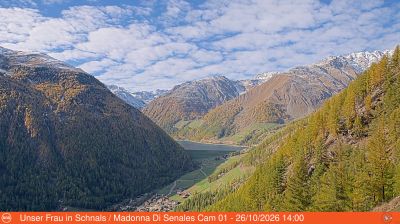
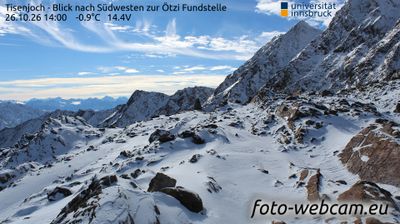
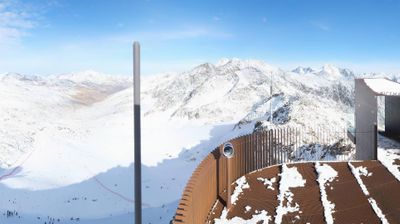
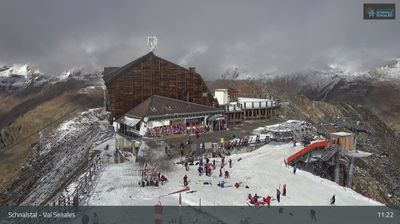
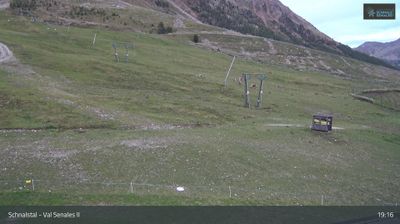
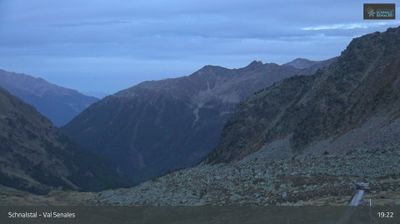

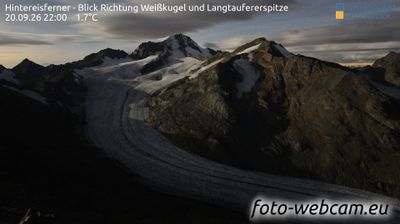
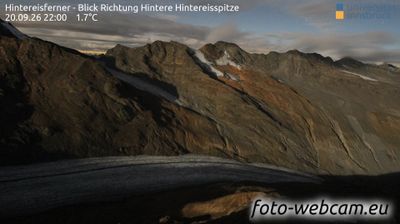


Schnals–Senales is best known in South Tyrol for the 1991 discovery of Ötzi, the Copper Age mummy found at the Tisenjoch pass in the Ötztal Alps. The municipality extends along the high Senales Valley, where farms and small settlements lie beneath glaciated alpine terrain. The archaeological find is presented at Bolzano’s South Tyrol Museum of Archaeology, while its discovery site near the Austrian border has made this valley central to the story of early Alpine travel. Karthaus, once a Carthusian monastery, adds a quieter historical layer to the route through the valley. Continue through nearby webcams to explore different parts of the Senales Valley.
7 webcams
Trentino-Alto Adige/Südtirol is renowned across Italy for the Dolomites, whose pale limestone massifs define much of its eastern skyline. This autonomous region follows the upper Adige basin, from vineyards and apple orchards around Bolzano to high valleys crossed by glaciers and Alpine passes. Its character is distinctly multilingual: Italian and German are official languages, while Ladin remains in use in several Dolomite valleys. Medieval castles, Tyrolean customs and Italian city life meet in a borderland historically connected with Tyrol. Continue with other webcams from the area to see how this part of the central Alps connects regionally.
694 webcams
Among the countries of southern Europe, Italy stands out for its Mediterranean coastline and cities marked by the legacy of ancient Rome. The Alps form its northern frontier, while the Apennines run down the peninsula and the Po crosses the broad plain of the north. Rome’s Colosseum and Roman Forum recall the ancient empire; Florence is closely associated with the Renaissance, and Venice is built across a lagoon on the Adriatic. Food changes markedly between regions, from olive-oil cooking in the south to rice dishes in the Po Valley. Sicily and Sardinia add distinct island identities to a country whose regions retain strong local character. Explore nearby webcam locations that provide complementary perspectives on Italy’s coasts, cities and mountains.
3.1K webcams