 Lubmin: Waldstraße - Anlegestelle Seebrücke Lubmin
Lubmin lies on the shore of Greifswalder Bodden in Mecklenburg-Vorpommern, a position that has shaped it as a Baltic seaside resort. The Anlegestelle at Seebrücke Lubmin leads from the dune-backed beach into the shallow bay, while Waldstraße follows the settled edge of the waterfront. Greifswalder Bodden is a broad Baltic lagoon between the mainland and the islands of Rügen and Usedom, giving Lubmin a different setting from Germany’s open-coast resorts. The town is also associated with the former Greifswald nuclear power plant, whose decommissioning forms part of the area’s modern industrial history. Beach paths and small-scale waterfront development keep the focus close to the shore.
Generated by AI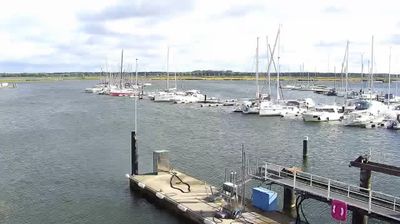


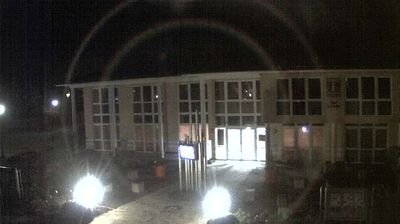
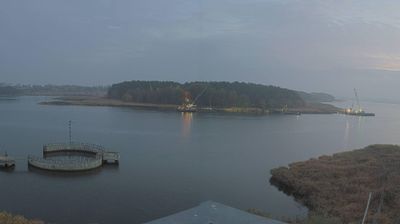
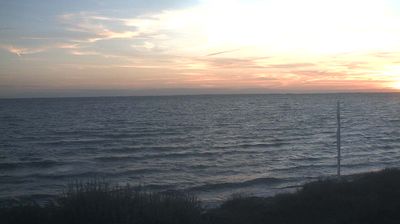
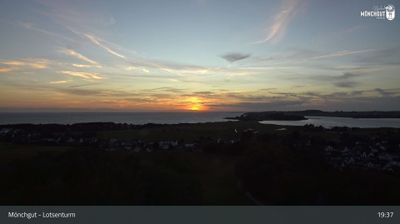


Lubmin occupies a low Baltic coastal strip on the southern shore of Greifswalder Bodden in Mecklenburg-Vorpommern. This small seaside resort combines a broad sandy beach with pine woods and the sheltered waters of the bodden, a lagoon-like bay connected to the Baltic Sea. Lubmin also has an important place in Germany’s industrial history: the former Greifswald Nuclear Power Plant stands nearby, a major energy project of former East Germany that was closed after reunification. Greifswald, a historic Hanseatic city, lies west along the bay. Browse additional webcams from the surrounding coast to extend your view of Greifswalder Bodden.
1 webcam
Mecklenburg-Vorpommern is best known within Germany for its Baltic Sea coastline, including the islands of Rügen and Usedom. Its northern edge meets the Baltic, while the interior is marked by lakes, lowland forests and farmland; Lake Müritz is Germany’s largest lake lying entirely within the country. The white chalk cliffs of Jasmund National Park on Rügen are among the state’s defining coastal formations. Stralsund and Wismar retain historic Hanseatic town centres, both inscribed on UNESCO’s World Heritage List. Ports, seaside resorts and lake districts give the region a distinctly northern character. Continue with other webcams from the area to see how this part of northeastern Germany connects regionally.
107 webcams
Germany stretches from the North Sea and Baltic Sea coasts to the Alps on its southern border, encompassing northern plains, river valleys and forested uplands. The Rhine, Danube and Elbe have long connected its regions, while the Black Forest and Bavarian Alps give the south a more dramatic relief. Berlin’s Brandenburg Gate and Museum Island reflect the capital’s role in German history and culture. Cologne Cathedral, a UNESCO World Heritage Site, rises above the Rhine, and the Bauhaus movement, founded in Weimar in 1919, transformed modern design far beyond Germany. Regional cooking, Christmas markets and brewing traditions bring further character to daily life. Browse additional webcams from the surrounding area to extend your view of Germany.
2.8K webcams