 Netanya
 sits on Israel’s Mediterranean coast in the Center District, where a dense modern city rises above the Sharon Plain. Founded in 1929 and named for the American philanthropist Nathan Straus, it developed from a small agricultural settlement into one of the country’s major coastal cities. Long sandy beaches and the cliff-lined shoreline are central to its identity, while broad boulevards, apartment districts and high-rises mark its rapid urban growth. Netanya is also associated with the diamond industry and has a large French-speaking community. Its position between Tel Aviv and Haifa gives it an important place on Israel’s coastal plain.
Generated by AI

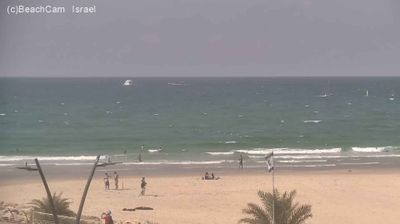
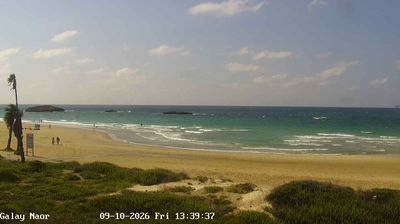

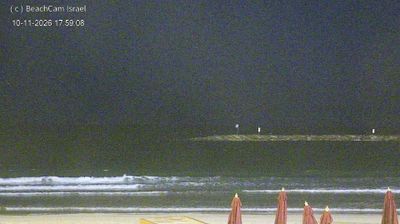
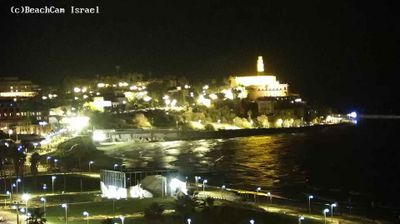

Netanya sits on Israel’s Mediterranean coast in the Center District, where kurkar sandstone cliffs meet a broad line of urban beaches. Founded in 1929 and named after the American philanthropist Nathan Straus, the city grew from a small agricultural settlement into one of the country’s major coastal communities. Its seafront promenade follows the bluff above the shore, while Independence Square forms a central gathering place inland. The nearby Poleg Stream and its nature reserve add coastal dunes to the built-up shoreline. Browse other webcams across Israel’s Center District to place this coast in a wider geographic context.
1 webcam
Center District stretches from the Mediterranean coast to the western foothills of the Judean Mountains, encompassing densely settled coastal plains, farmland, and expanding urban corridors. The Yarkon River rises at Tel Afek near Rosh HaAyin before continuing west toward the sea, linking one of Israel’s principal river systems with the district’s cities. Ramla, founded as an Umayyad city in the early eighth century, retains its medieval White Tower, while nearby Lod reflects the area’s long role as a crossroads. Continue with other webcams from the area to see how this part of central Israel connects regionally.
1 webcam
Among the countries of the eastern Mediterranean, Israel stands out for its compact geography, where a Mediterranean coast, the Jordan Valley and the Negev Desert lie within a relatively small area. Jerusalem’s Old City contains places sacred to Judaism, Christianity and Islam, including the Western Wall, the Church of the Holy Sepulchre and the Al-Aqsa Mosque. To the north, the Sea of Galilee is a freshwater lake associated with Christian tradition; southward, the Dead Sea marks the country’s lowest-lying region. Tel Aviv brings a contrasting modern urban pace, with its UNESCO-listed White City ensemble of early modernist architecture. Discover other points of interest through webcams located across Israel.
21 webcams