 Senj: Harbour - Breakwater & Lighthouse Live View
Senj occupies a narrow Adriatic coastal strip beneath the Velebit Mountains in Lika-Senj County. Its waterfront faces the Velebit Channel towards the island of Krk, while the town rises from the harbour into steep limestone terrain. Senj was an important stronghold of the Uskoks, frontier fighters active against Ottoman and Venetian power in the 16th and 17th centuries. Nehaj Fortress, built in 1558 on the hill above town, remains its defining monument. The port, stone seafront and compact centre give Senj a firmly maritime identity, shaped by its position on Croatia’s northern Adriatic coast.
Generated by AI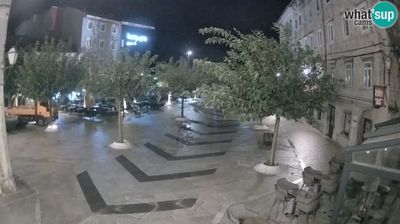

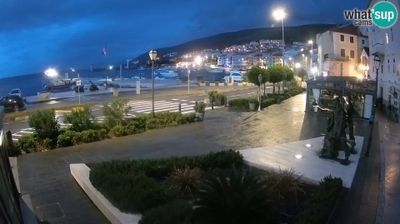


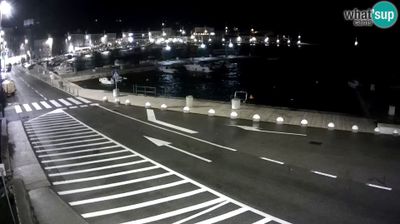
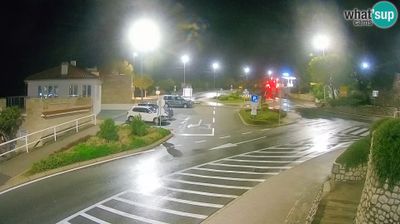


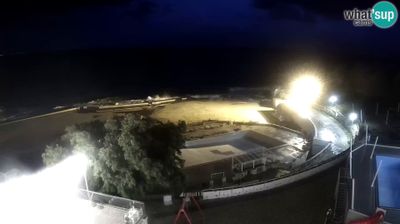

Tucked along the Adriatic coast beneath the Velebit range, Senj is a town whose character is shaped by the bora, a powerful northeasterly wind that can sweep down from the mountains with exceptional force. This narrow shore faces the islands of Krk and Rab across the Kvarner Gulf, while the Velebit slopes rise immediately inland. Nehaj Fortress, completed in 1558, stands above the town as the enduring emblem of the Uskoks, frontier fighters associated with Senj in the 16th century. Its old streets, seafront and compact harbour retain the practical feel of a historic coastal port. Continue with other webcams from the area to see how this stretch of Croatia’s Adriatic coast connects with the Velebit hinterland.
4 webcams
Lika-Senj County extends from the Adriatic coast beneath the Velebit range to the limestone plateaus of Lika, encompassing a marked contrast between island-dotted seascapes, mountains and inland karst. In the county’s northeast, Plitvice Lakes National Park is known for its chain of lakes and travertine barriers; it has been a UNESCO World Heritage Site since 1979. The Gacka River, noted for its clear springs, runs through a gentler valley near Otočac. On the coast, the old town of Senj is crowned by Nehaj Fortress, built in the 16th century as a defensive stronghold. Browse other webcams across Lika-Senj County to place this karst-and-coast setting in a wider Croatian context.
23 webcams
Croatia occupies a long Adriatic coastline in southeastern Europe. Its shore is broken into islands and sheltered coves, while the Dinaric Alps rise inland and the Danube forms part of its eastern border. Dubrovnik’s fortified old city faces the sea, and Split grew around Diocletian’s Palace, a Roman complex begun in the early fourth century. Inland, Plitvice Lakes National Park is known for terraced lakes linked by waterfalls and has been a UNESCO World Heritage Site since 1979. Istrian olive groves, Zagreb and Slavonia’s vineyards reveal distinct regional identities. Explore nearby webcam locations that provide complementary perspectives on the Adriatic coast and Croatia’s interior.
381 webcams