 Sarralbe: Télé-Cigognes
Sarralbe stands along the Saar River in the Moselle department of Grand Est, where the river valley has shaped a compact settlement close to the French-German border. Part of historic Lorraine, the town has a borderland character in its street fronts, including traditional half-timbered construction alongside more formal civic buildings. The Saar connects Sarralbe with the wider Saarland-Lorraine basin, while the centre remains close-knit in scale. White storks also hold a conspicuous place here: a large nest in the heart of town makes this migratory bird part of Sarralbe’s local identity. Its built fabric, river setting and stork tradition give the town a distinctly regional profile.
Generated by AI





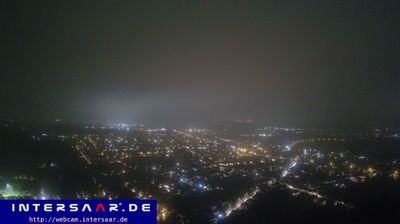

Sarralbe combines the quiet rhythm of a small riverside town with Lorraine’s cross-border character in a way that reflects its position at the confluence of the Sarre and Albe rivers. In the Moselle department, it stands close to the German frontier, in a region shaped by centuries of movement between French- and German-speaking worlds. The Church of Saint-Martin is a prominent local landmark, while the riverbanks give the town a distinctly lowland setting. Follow how Sarralbe relates to the Sarre valley and the wider Grand Est by browsing webcams nearby.
1 webcam
Grand Est is best known in France for the Champagne vineyards that sustain one of the country’s most celebrated wine traditions. Extending from the Ardennes to Alsace on the German border, this large eastern region unites the historic territories of Alsace, Champagne-Ardenne and Lorraine. The Moselle runs through Lorraine, while the Rhine shapes much of the eastern frontier. Strasbourg, the regional capital, is home to the European Parliament and its celebrated Gothic cathedral; nearby Nancy is distinguished by the UNESCO-listed Place Stanislas. Continue through nearby webcams to explore different parts of Grand Est.
109 webcams
The Atlantic and Mediterranean coastlines, together with the Alps, Pyrenees and broad river basins, define much of France — they support maritime trade, farming, wine regions and travel throughout the year. The Seine runs through Paris, where the Eiffel Tower and the Louvre are among Europe’s most recognised landmarks. The Loire Valley is known for Renaissance châteaux, while Mont-Saint-Michel rises from a tidal bay in Normandy. Regional food traditions are equally distinctive, from Breton seafood to Provençal cooking, with bread, cheese and wine central to everyday life. France’s global cultural influence is evident in its language, literature, fashion and cinema. View additional webcams nearby to better understand how France’s coasts, plains and mountain borders relate to their surroundings.
2.2K webcams