 Canale d'Agordo: Monte Civetta - Pala group - San Martino di Castrozza - Dolomites
The Biois Valley defines the setting of Canale d’Agordo — wooded slopes, meadows and steep Dolomite walls give this Veneto community a distinctly alpine form. The village lies in the province of Belluno, within the Dolomites, a UNESCO World Heritage property since 2009. Civetta and the Pale di San Martino are major mountain groups of this part of the range, while San Martino di Castrozza is a noted mountain resort farther east. Canale d’Agordo is also the birthplace of Albino Luciani, Pope John Paul I; the Museo Albino Luciani recalls his life and legacy.
Generated by AI




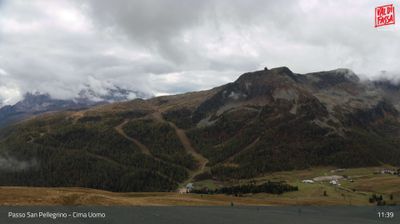
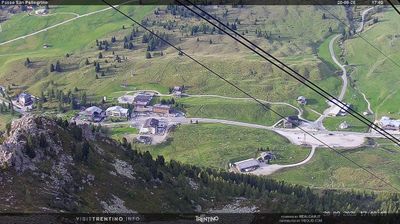

The Biois Valley defines the setting of Canale d’Agordo — steep Dolomite slopes enclose its compact centre and shape life in this high Alpine corner of Veneto. Known as Forno di Canale until 1964, the town is the birthplace of Albino Luciani, who became Pope John Paul I in 1978. The Museo Albino Luciani and his family home preserve the connection to the short-lived pontiff, while stone houses, parish buildings and small squares retain the scale of a mountain community. The surrounding Dolomites form part of a UNESCO World Heritage site. Discover other points of interest through webcams located across the Veneto Dolomites.
2 webcams
Veneto has served as a cultural crossroads within Italy since the Roman era. Its territory runs from the Dolomites in the north to the Adriatic coast, passing fertile plains crossed by the Brenta, Piave and Adige rivers. Venice, built on a lagoon and once the centre of a powerful maritime republic, remains the region’s defining historic city, while Verona is known for its Roman arena and Padua for its ancient university. Palladian villas around Vicenza reflect the architectural legacy of Andrea Palladio, and the hills north of Treviso are associated with Prosecco production. Move on to other webcams in the region to compare landscapes and settings around Veneto.
263 webcams
Among the countries of southern Europe, Italy stands out for its Mediterranean coastline and cities marked by the legacy of ancient Rome. The Alps form its northern frontier, while the Apennines run down the peninsula and the Po crosses the broad plain of the north. Rome’s Colosseum and Roman Forum recall the ancient empire; Florence is closely associated with the Renaissance, and Venice is built across a lagoon on the Adriatic. Food changes markedly between regions, from olive-oil cooking in the south to rice dishes in the Po Valley. Sicily and Sardinia add distinct island identities to a country whose regions retain strong local character. Explore nearby webcam locations that provide complementary perspectives on Italy’s coasts, cities and mountains.
3.1K webcams