 Osnago
 lies in the Brianza plain, where low wooded hills and cultivated land meet the built-up belt between Milan and Lecco. The municipality belongs to Brianza, a historic part of Lombardy positioned between the Po Valley and the Alpine foothills. Its station on the Milan–Lecco railway places Osnago within a long-established commuter corridor, while the local centre retains the scale of a small Italian comune. The parish church of Santo Stefano is a focal point of civic and religious life. Tree-lined residential streets and gardens reinforce Osnago’s settled, quieter character beyond the denser urban cores of Milan and Lecco.
Generated by AI


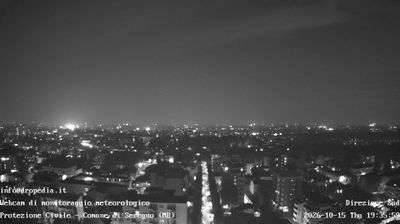
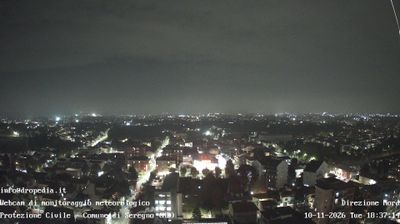


The rolling hills of Brianza define the setting of Osnago — cultivated fields, residential streets and small woodlands give the town a distinctly semi-rural rhythm. Osnago lies in the Meratese area of Lombardy, west of the Adda River, within the urban belt between Milan and Lecco. Its railway station on the Milan–Lecco line connects local life with two of northern Italy’s major cities. The parish church of Santo Stefano remains a reference point in the historic centre. Browse other webcams across Lombardy and Brianza to place this setting in a wider geographic context.
1 webcam
Shaped by the Po Valley and the southern Alps, Lombardy developed into Italy’s leading economic region. Its territory runs from high Alpine valleys to the broad Po plain, where the Adda, Oglio and Ticino are major waterways. Milan is its metropolitan centre, marked by the Gothic Duomo and a long role in finance, design and publishing. Farther east, Bergamo is divided between its walled Città Alta and modern lower city; nearby Lake Iseo lies between Lombardy’s pre-Alpine ridges. Rice fields around Pavia, vineyards in Franciacorta and lake towns give the region a markedly varied identity. Browse other webcams across Lombardy to place this setting in a wider geographic context.
314 webcams
Among the countries of southern Europe, Italy stands out for its Mediterranean coastline and cities marked by the legacy of ancient Rome. The Alps form its northern frontier, while the Apennines run down the peninsula and the Po crosses the broad plain of the north. Rome’s Colosseum and Roman Forum recall the ancient empire; Florence is closely associated with the Renaissance, and Venice is built across a lagoon on the Adriatic. Food changes markedly between regions, from olive-oil cooking in the south to rice dishes in the Po Valley. Sicily and Sardinia add distinct island identities to a country whose regions retain strong local character. Explore nearby webcam locations that provide complementary perspectives on Italy’s coasts, cities and mountains.
3.1K webcams