 Hamburg
 combines the working scale of a major container port with the civic polish of a Hanseatic metropolis in a way that reflects its position on the Elbe. Germany’s largest seaport lies well inland, where the tidal river connects the city with the North Sea. The port handles containers, bulk cargo and conventional freight; terminals, rail yards and warehouses form an industrial belt along the river. Central Hamburg has a different texture, shaped by the Alster lakes and canals. The historic Speicherstadt warehouse district, built from the late 19th century, forms part of the UNESCO-listed Speicherstadt and Kontorhaus District with Chilehaus. Hamburg’s port tradition is linked to trading privileges granted to the city by Emperor Frederick I in 1189.
Generated by AI
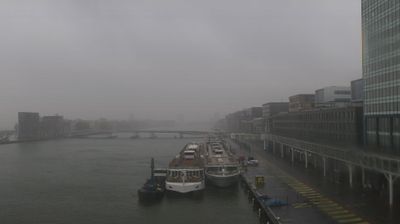

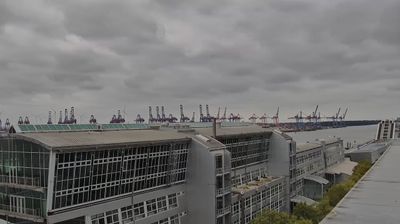


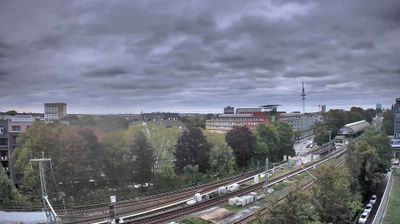


Hamburg sits on the River Elbe in northern Germany, where tidal waters and canals shape a major port city. The Alster, dammed in the city centre, forms the Binnenalster and Außenalster lakes, bringing broad stretches of water into the dense urban core. Speicherstadt’s red-brick warehouses, built around the turn of the 20th century on timber piles, form a UNESCO World Heritage site with the neighbouring Kontorhaus district. In HafenCity, the Elbphilharmonie rises above a former warehouse base. Hamburg’s maritime character also endures in its fish market and harbour ferries. Continue with other webcams from the area to see how this part of northern Germany connects regionally.
10 webcams
The River Elbe defines much of Hamburg – its tidal channel and harbour have made the city Germany’s leading seaport and a centre of trade, logistics and industry. From the Binnenalster lake in the centre to the broad Elbe waterfront, water is integral to daily life and the city’s layout. The Port of Hamburg links inland Europe with global shipping, while the historic Speicherstadt warehouse district, built on timber piles, is part of the UNESCO-listed Speicherstadt and Kontorhaus District with Chilehaus. Music venues, theatres and the Elbphilharmonie underline Hamburg’s contemporary cultural importance. Explore nearby webcam locations that provide complementary perspectives on Hamburg and the Elbe.
19 webcams
Germany stretches from the North Sea and Baltic Sea coasts to the Alps on its southern border, encompassing northern plains, river valleys and forested uplands. The Rhine, Danube and Elbe have long connected its regions, while the Black Forest and Bavarian Alps give the south a more dramatic relief. Berlin’s Brandenburg Gate and Museum Island reflect the capital’s role in German history and culture. Cologne Cathedral, a UNESCO World Heritage Site, rises above the Rhine, and the Bauhaus movement, founded in Weimar in 1919, transformed modern design far beyond Germany. Regional cooking, Christmas markets and brewing traditions bring further character to daily life. Browse additional webcams from the surrounding area to extend your view of Germany.
2.5K webcams