 Pinggau: VK_A02_093,500-F1-FL
Pinggau has served as a market town in eastern Styria since the Middle Ages. The settlement lies in the Pinka valley, where the wooded foothills of the Wechsel range meet the rolling country toward Burgenland. The pilgrimage church of Maria Hasel reflects the area’s Catholic traditions and remains an important regional destination. Modern Pinggau is closely tied to transport: the A2 Süd Autobahn passes nearby on the Vienna–Graz route, while the market centre remains a compact local service hub. Forest, fields and low slopes give this part of Austria a transitional character between Alpine uplands and the Pannonian east.
Generated by AI

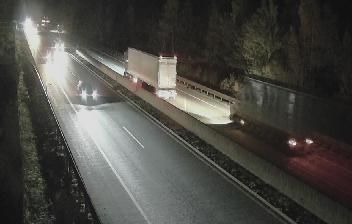




Among the towns of Styria, Pinggau stands out for its position in the upper Pinka valley beneath the eastern foothills of the Wechsel. The market town lies near the meeting area of Styria, Lower Austria and Burgenland, where wooded slopes and farmland mark the transition from the Alps towards the Pannonian plain. The Pinka, which continues east into Burgenland, gives the settlement its valley setting. Pinggau’s Wallfahrtskirche Maria Hasel is a local pilgrimage destination, adding a religious landmark to a community shaped by regional routes rather than urban bustle. Explore nearby webcam locations that provide complementary perspectives on Pinggau and eastern Styria.
4 webcams
The terrain of Styria ranges from Alpine ridges in the north and west to vine-covered hills in the southeast, giving Austria’s second-largest province a distinctly varied character. The Mur is its principal river, flowing through Graz, the provincial capital and largest city. Graz’s Old Town and Schloss Eggenberg are jointly inscribed on UNESCO’s World Heritage List, linking Renaissance and Baroque architecture to the region’s urban identity. Southern Styria is known for vineyards and pumpkin-seed oil, while forests and pastureland shape much of the interior. Discover how Styria connects with the wider Austrian landscape by browsing webcams nearby.
418 webcams
Austria stretches from the Bohemian Massif along its northern edge to the Carnic Alps on the Italian border, encompassing high Alpine ranges and the Danube lowlands. The Danube links cities including Linz and Vienna, while the Grossglockner, at 3,798 metres, is the country’s highest mountain. Vienna developed for centuries as the seat of the Habsburg court, leaving imperial architecture around the Hofburg and Schönbrunn Palace. Salzburg is closely associated with Wolfgang Amadeus Mozart, who was born there in 1756. Alpine Tyrol, wine-growing areas east of Vienna and the lakes of Salzkammergut add markedly different regional identities. Browse other webcams across Austria to place this setting in a wider geographic context.
3.1K webcams