 Citta di Castello: Panoramica dell'Appennino Tifernate
Città di Castello combines Renaissance urban heritage with a predominantly rural setting in a way that reflects its position in the upper Tiber Valley. The town grew from the Roman settlement of Tifernum Tiberinum and later became an important Umbrian commune. Its centre includes Palazzo Vitelli alla Cannoniera, a Renaissance residence that houses the municipal art gallery, while the Fondazione Palazzo Albizzini preserves works by the Città di Castello-born artist Alberto Burri. Beyond the town, the valley rises into wooded and cultivated foothills of the Apennines, giving this northern Umbrian area a distinctly agricultural character.
Generated by AI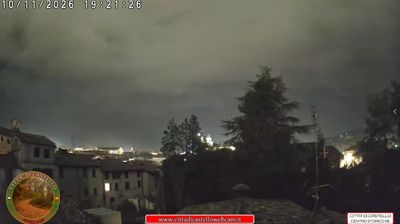
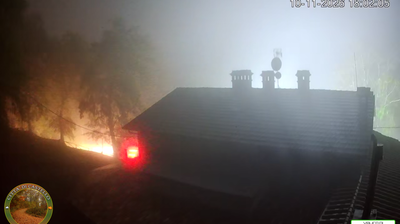

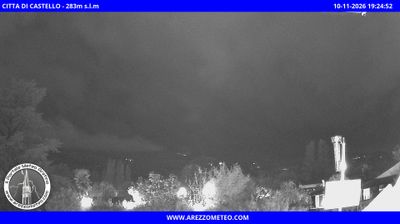
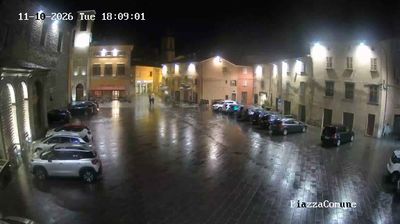

The upper Tiber River shapes the setting of Città di Castello — its broad valley has long placed this northern Umbrian town between Tuscany and the Apennines. Within the historic centre, the Civic Art Gallery occupies Palazzo Vitelli alla Cannoniera, a Renaissance residence distinguished by its painted façade. Città di Castello is also closely associated with Alberto Burri, the twentieth-century artist born here; the Fondazione Palazzo Albizzini Collezione Burri preserves a major body of his work in the town. Renaissance palaces and churches give the centre a formal urban character uncommon in smaller Umbrian communities. Explore nearby locations that provide complementary perspectives on the Upper Tiber Valley and Umbria.
5 webcams
Umbria blends an agricultural calm with the rugged contours of the Apennines in a way that reflects its position within central Italy. Italy’s only region without a coastline or an international border, it is crossed by the Tiber and includes Lake Trasimeno, one of the country’s largest lakes. Perugia, the regional capital, preserves an Etruscan past, while Assisi is known worldwide for the Basilica of Saint Francis and its UNESCO-listed artistic heritage. Olive groves, vineyards and hill towns remain central to the region’s everyday character. Continue through nearby webcams to explore different parts of Umbria.
39 webcams
Among the countries of southern Europe, Italy stands out for its Mediterranean coastline and cities marked by the legacy of ancient Rome. The Alps form its northern frontier, while the Apennines run down the peninsula and the Po crosses the broad plain of the north. Rome’s Colosseum and Roman Forum recall the ancient empire; Florence is closely associated with the Renaissance, and Venice is built across a lagoon on the Adriatic. Food changes markedly between regions, from olive-oil cooking in the south to rice dishes in the Po Valley. Sicily and Sardinia add distinct island identities to a country whose regions retain strong local character. Explore nearby webcam locations that provide complementary perspectives on Italy’s coasts, cities and mountains.
3.1K webcams