 Kristiansand
Among the cities of Agder, Kristiansand stands out for its position where the River Otra meets the Skagerrak. Founded in 1641 by King Christian IV, it was laid out with a rectilinear central district known as Kvadraturen, whose broad streets remain a defining part of the city plan. Kristiansand is southern Norway’s principal urban centre and an important port, with ferries linking it to Denmark. Its coastline combines sheltered inlets, islands and beaches, while wooded hills and rocky ground rise close to built-up areas. The E39 is a key road connection through southern Norway, tying Kristiansand to the wider Agder region and routes west toward Stavanger.
Generated by AI


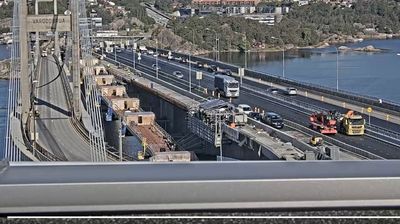

Kristiansand has served as a port and administrative centre in Agder since its founding by King Christian IV in 1641. The city stands where the Otra reaches Kristiansandsfjorden, with the island of Odderøya shaping part of its waterfront. In Kvadraturen, the central street grid created for the new town still defines the centre, while nearby Posebyen preserves one of northern Europe’s largest ensembles of low wooden houses. Kilden Performing Arts Centre on Odderøya is home to the Kristiansand Symphony Orchestra and Agder Theatre. View additional webcams nearby to better understand how Kristiansand and Agder relate to the Skagerrak coast.
9 webcams
Agder is best known within Norway for its long Skagerrak coastline. That maritime identity is balanced by a spacious interior of forests, lakes and upland valleys, where the Otra River runs through Setesdal before reaching the coast at Kristiansand. The county’s southern towns, including Kristiansand, Arendal and Grimstad, have long been shaped by seafaring and trade. Further inland, Setesdal maintains distinctive traditions: its traditional music, dance and singing were inscribed on UNESCO’s Representative List of the Intangible Cultural Heritage of Humanity in 2019. Explore additional webcams nearby to see how Agder’s valleys and coast connect across southern Norway.
91 webcams
Norway has served as a seafaring link between the North Atlantic and northern Europe since the Viking Age. Its long coastline is cut by fjords, while the Lofoten archipelago rises sharply from the Norwegian Sea and the mountains of Jotunheimen include Galdhøpiggen, Norway’s highest peak. Bergen’s Bryggen, the former Hanseatic wharf, recalls centuries of maritime trade. Farther north, Sámi culture remains an essential part of the country’s identity. Explore nearby webcam locations that provide complementary perspectives on Norway’s coast, fjords and mountain regions.
1.5K webcams