 Strzelce Krajenskie: Rynek Miejski w Strzelcach Krajeńskich
Among the towns of Lubusz Voivodeship, Strzelce Krajeńskie stands out for its medieval core, still traced by defensive walls. It lies in the gently rolling, lake-dotted countryside of northern Lubusz, where woodland and small towns shape the wider landscape. Rynek, the market square, remains the civic centre, bordered by townhouses and public buildings in a compact urban layout. Historically known by the German name Friedeberg, Strzelce Krajeńskie developed in the medieval Neumark, a borderland once associated with Brandenburg. The surviving fortifications give the old centre a distinct sense of continuity.
Generated by AI

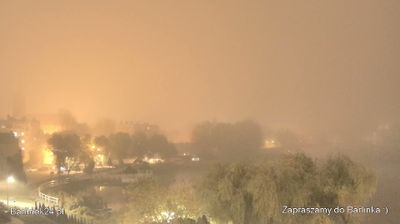

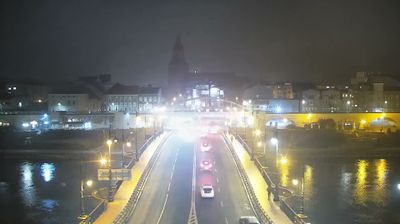
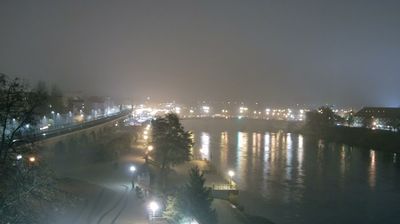
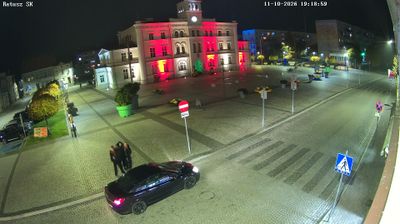

Strzelce Krajeńskie is renowned in Lubusz Voivodeship for its surviving medieval defensive walls, a legacy of the town’s place in the historic Neumark borderland. The centre lies beside Lake Górne, while nearby Lake Dolne adds another waterside element to the urban setting. Sections of the old fortifications still trace the outline of the historic core, linking streets, houses and public spaces to the town’s medieval layout. Strzelce Krajeńskie is a useful stop for travellers interested in the less familiar historic towns of western Poland. Discover other points of interest through webcams located across Strzelce Krajeńskie and Lubusz Voivodeship.
1 webcam
Lubusz Voivodeship is best known in Poland for the long-established wine tradition of Zielona Góra. Set along the country’s western border, this largely lowland region is threaded by the Oder and Warta rivers, with broad forests and numerous post-glacial lakes shaping its quieter rural areas. Zielona Góra’s annual Winobranie festival reflects a local viticultural heritage unusual in Poland, while towns such as Gorzów Wielkopolski and Międzyrzecz add urban and historical reference points. Borderland links with Germany remain part of the region’s everyday character. Continue through nearby webcams to explore different parts of Lubusz Voivodeship.
9 webcams
Poland stretches from the Baltic Sea coast in the north to the Carpathian Mountains along its southern frontier, encompassing broad lowlands, lake districts and upland ranges. The Vistula, the country’s longest river, links Kraków and Warsaw before reaching the Baltic near Gdańsk, while the Masurian Lake District is defined by a dense network of lakes. Kraków’s historic centre, including Wawel Castle, recalls Poland’s former royal capital; Warsaw’s rebuilt Old Town speaks to the city’s recovery after the Second World War. The Białowieża Forest preserves one of Europe’s last primeval lowland forests and is home to European bison. Follow how Poland’s regions relate to one another by browsing webcams across the country.
718 webcams