 Faribault: I-35: I-35 SB (MP 61.1)
Faribault is best known in Minnesota for its historic woolen-mill tradition. Set in Rice County on the Cannon River, the city grew from a fur-trading settlement established by Alexander Faribault in 1835 and was platted in 1852. Faribault Woolen Mill, founded in 1865, has made blankets and other wool goods a lasting local signature. Its institutional landscape is equally distinctive: the Minnesota State Academy for the Deaf and the Minnesota State Academy for the Blind were both established here in 1866. The city’s older core includes the Alexander Faribault House, while Interstate 35 places it on a main north–south corridor between the Twin Cities and southern Minnesota. Parks and river corridors soften an urban area shaped by manufacturing, schools and regional travel.
Generated by AI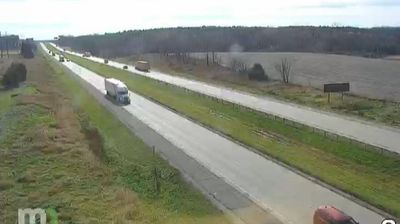


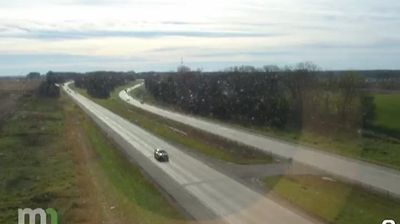

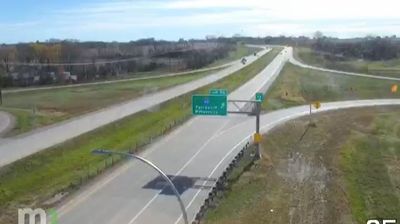


The confluence of the Straight and Cannon rivers defines the setting of Faribault — their valleys bring wooded banks and parkland into a city surrounded by southern Minnesota farmland. Named for fur trader Alexander Faribault, the city developed as a regional trading and milling center in the 19th century. As the seat of Rice County, it maintains a civic role for the surrounding area, while its downtown includes longstanding brick commercial architecture. The Faribault Woolen Mill, founded in 1865, remains a prominent local institution, and Shattuck-St. Mary’s boarding school traces its origins to 1858. View additional webcams nearby to better understand how Faribault and southern Minnesota relate to their surroundings.
9 webcams
Forests, prairie and a vast lake country define much of Minnesota – these environments sustain farming, recreation and communities accustomed to long, cold winters. The Mississippi River begins at Lake Itasca in the north, then crosses the state on its way south, while Minnesota’s Lake Superior shoreline brings a markedly different, rocky Great Lakes character to the northeast. Minneapolis and Saint Paul form the Twin Cities on the river, the state’s principal urban centre. Minnesota is also home to Dakota and Ojibwe communities whose cultural presence remains central to the region. Move on to other webcams in the region to compare landscapes and settings around Minnesota.
1.2K webcams
The Atlantic, Pacific and Gulf coasts define much of the United States — their ports, fisheries and trade routes have long tied the country’s economy to the wider world. Between them, the Rocky Mountains, Great Plains and Mississippi River basin form sharply different regions, from high western ranges to broad agricultural heartlands. Cities carry much of the national story: New York’s Statue of Liberty, a gift from France dedicated in 1886, remains an enduring symbol, while Washington, DC concentrates major federal institutions. Indigenous nations have shaped these lands for millennia, and their living cultures remain essential to the country’s identity. Find related webcams in the surrounding areas to build a fuller picture of the United States.
32K webcams