 Pelkosenniemi: Perherinne
Built around the slopes of Pyhätunturi, Pyhä grew into a compact fell resort in eastern Finnish Lapland. It stands beside Pyhä-Luosto National Park, whose rugged fells, spruce forests and old-growth woodland form one of the region’s defining protected landscapes. The resort’s marked pistes and lifts sit amid forested terrain rather than an urban centre, while routes in the national park extend the area’s appeal beyond downhill skiing. Pyhätunturi belongs to a chain of ancient fells shaped by erosion, a distinctive feature of this part of Lapland. Its Finnish name means “holy fell”, preserving the cultural weight long attached to the mountain. Pelkosenniemi municipality provides the wider local setting, with small settlements spread across a largely forested landscape.
Generated by AI

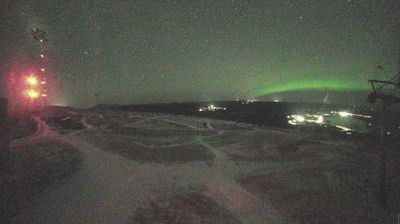
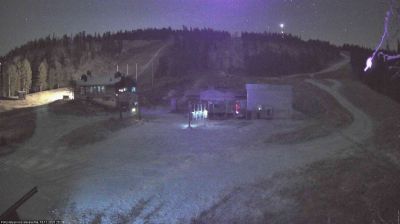
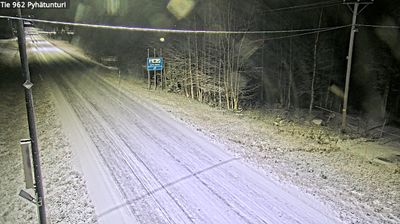
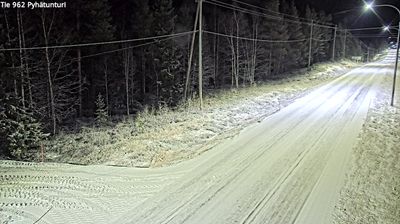

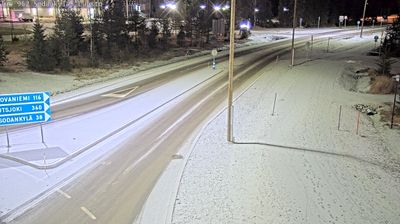

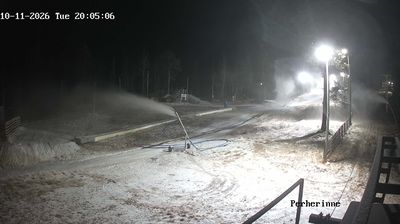

Pelkosenniemi has served as a municipal centre in Finnish Lapland since the early 20th century. The settlement stands beside the Kitinen River, amid the broad forests, waterways and fells of northern Finland. Its municipality extends towards Pyhä-Luosto National Park, where the Pyhätunturi fell area is a recognised destination for hiking and winter activities. Pelkosenniemi Church, completed in 1929, marks the long-established community at the heart of this sparsely populated area. Reindeer herding and seasonal outdoor life remain part of the local Lapland identity. Discover how Pelkosenniemi relates to the wider Lapland region by browsing webcams nearby.
11 webcams
Built around river valleys, reindeer husbandry and forestry, Lapland developed into Finland’s northernmost and largest region. Long winters, forests and rounded fells define its inland character, while the Kemijoki, Finland’s longest river, drains a large part of the area. Sámi culture is central to the north of the region; Finnish settlements have also long depended on woodland work and river routes. Rovaniemi, Lapland’s administrative centre, stands at the meeting of the Kemijoki and Ounasjoki and is home to the Arktikum science centre and museum. Explore nearby webcam locations that provide complementary perspectives on Finnish Lapland.
201 webcams
The terrain of Finland ranges from low coastal plains along the Gulf of Bothnia to fells in Lapland, creating a country of forests, lakes and long northern distances. More than 180,000 lakes shape everyday life, while the Lakeland region is threaded with waterways and islands. Helsinki, on the Gulf of Finland, combines neoclassical landmarks around Senate Square with contemporary Finnish design. Farther north, the Sámi are Finland’s only recognised Indigenous people, and their culture remains closely connected to the Arctic region. In winter, snow and ice transform the north; in summer, long daylight extends outdoor life well into the evening. Continue through nearby webcams to explore different parts of Finland.
1.7K webcams