 Las Palmas de Gran Canaria
Few places in the Canary Islands have a history as closely tied to Atlantic navigation as Las Palmas de Gran Canaria. Founded in 1478 on Gran Canaria’s northeast coast, the city grew from a Castilian settlement into the island’s administrative centre and a major port. Playa de Las Canteras runs along the Atlantic-facing urban shore, backed by a dense waterfront of hotels, apartments and cafés. Its natural offshore reef, La Barra, shelters much of the beach. Inland, the old quarter of Vegueta preserves the Cathedral of Santa Ana and streets associated with the city’s earliest development. Volcanic terrain and a position between Europe, Africa and the Americas have long shaped Las Palmas’s outward-looking character.
Generated by AI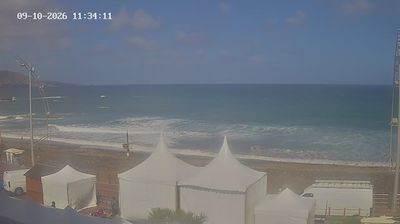

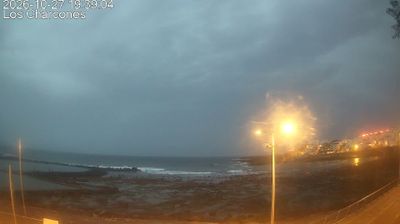
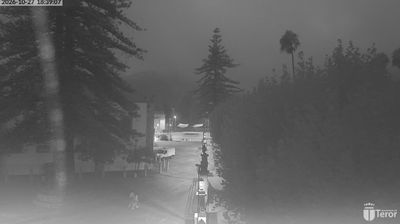


Las Palmas de Gran Canaria straddles the Atlantic-facing isthmus of northeastern Gran Canaria in the Canary Islands, a position that has made it both a beach city and an important port. Las Canteras beach follows the northern seafront, where the natural La Barra reef helps shelter part of the bay. Inland, the historic quarter of Vegueta preserves the city’s earliest streets; Las Palmas was founded in 1478, and the Cathedral of Santa Ana anchors its main square. Casa de Colón traces the island’s connections with Atlantic navigation, while Puerto de la Luz remains central to the city’s maritime character. Continue with other webcams from the area to see how this part of northern Gran Canaria connects regionally.
3 webcams
The Canary Islands have served as an Atlantic crossroads within Spain since the fifteenth century. This volcanic archipelago lies off northwestern Africa, where the Atlantic Ocean, trade winds and sharply varying terrain shape climates ranging from dry coasts to cool uplands. Tenerife is home to Mount Teide, Spain’s highest peak, while the Teide National Park is a UNESCO World Heritage Site. Across the islands, black-sand shores, lava fields and cultivated slopes reflect their volcanic origins. Carnival traditions, especially those of Santa Cruz de Tenerife, remain an important part of the local calendar. View additional webcams nearby to better understand how the Canary Islands relate to the Atlantic and to one another.
74 webcams
Spain extends from the Cantabrian coast to the Canary Islands, encompassing Atlantic shores, Mediterranean beaches and the broad interior Meseta. The Pyrenees form its northeastern frontier, while the Guadalquivir crosses Andalusia on its way to the Atlantic. Madrid anchors the country’s political and cultural life, but distinct regional identities are central to Spain’s character: Catalonia, the Basque Country, Galicia and Andalusia each have their own languages or strong local traditions. Granada’s Alhambra is a major monument of the medieval Nasrid dynasty, and Santiago de Compostela remains the destination of the Camino de Santiago. Browse related webcams around the Iberian Peninsula to build a fuller picture of Spain.
1.4K webcams