 Carces
Lac de Carcès defines the setting of Carcès — the reservoir on the Caramy River brings a broad stretch of water to the foot of this Provençal town. Carcès lies in the Var department, among the wooded hills and vineyards of inland Provence rather than on the Mediterranean coast. Its older quarters rise towards the remains of the medieval Château de Carcès, recalling the settlement’s fortified past. The lake was created by damming the Caramy and supplies drinking water to the Toulon area. Waterside paths and fishing spots make the reservoir part of local recreation as well as regional infrastructure. Carcès is a useful stop for understanding a quieter side of Provence, where a compact historic centre meets cultivated land and low limestone country.
Generated by AI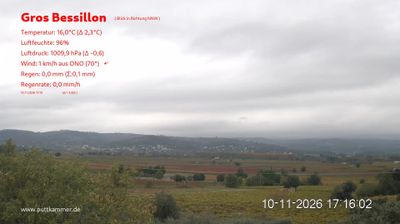
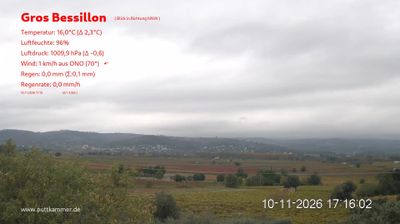
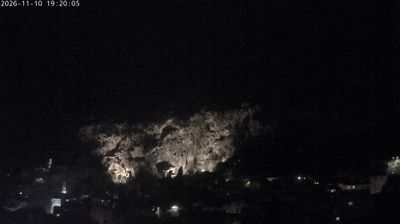

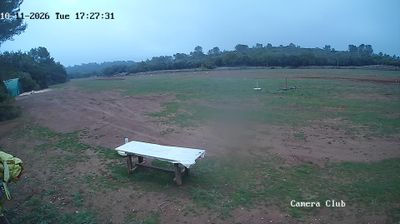
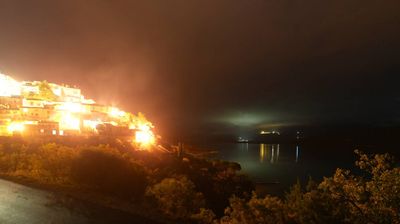
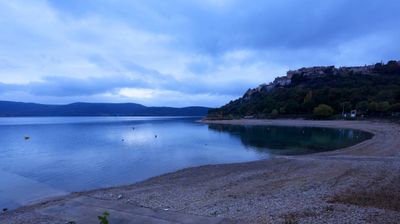
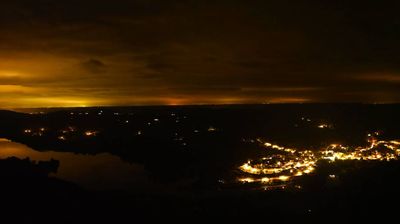

Built around a medieval castle, Carcès grew into a compact Provençal town above the Caramy River in the Var hinterland. The old centre still follows steep, narrow lanes beneath the remains of the Château de Carcès, recalling the settlement’s feudal past. South of town, the Caramy is held back to form Lac de Carcès, a wooded reservoir used for walking and fishing. Vineyards, olive groves and low limestone hills place the commune firmly in inland Provence, while the Mediterranean coast lies beyond the Massif des Maures. Trace how Carcès fits into the wider Var landscape by browsing webcams nearby.
3 webcams
Provence-Alpes-Côte d’Azur occupies France’s southeastern Mediterranean coast and Alpine borderlands. Its terrain runs from the Rhône delta and the Camargue wetlands to the limestone coves of the Calanques and the high valleys of the French Alps, while the Côte d’Azur forms its celebrated shoreline. Marseille, France’s oldest city, is a major port, and Avignon’s Palais des Papes recalls the 14th-century papal court. Inland, Provençal markets, olive cultivation and lavender-growing areas remain central to regional identity. Browse additional webcams nearby to see how Provence-Alpes-Côte d’Azur connects with the Mediterranean, the Alps and neighbouring Italy.
270 webcams
The Atlantic and Mediterranean coastlines, together with the Alps, Pyrenees and broad river basins, define much of France — they support maritime trade, farming, wine regions and travel throughout the year. The Seine runs through Paris, where the Eiffel Tower and the Louvre are among Europe’s most recognised landmarks. The Loire Valley is known for Renaissance châteaux, while Mont-Saint-Michel rises from a tidal bay in Normandy. Regional food traditions are equally distinctive, from Breton seafood to Provençal cooking, with bread, cheese and wine central to everyday life. France’s global cultural influence is evident in its language, literature, fashion and cinema. View additional webcams nearby to better understand how France’s coasts, plains and mountain borders relate to their surroundings.
2.2K webcams