 La Salle-les-Alpes: Col de Méa
Built around farming hamlets beside the Guisane, La Salle-les-Alpes grew into one of the principal villages of the Serre Chevalier mountain area. Above it, Col de Méa is a high mountain pass within the resort’s lift-served terrain, where broad open slopes meet the ridges of the southern French Alps. The Guisane valley links Briançon with the Col du Lautaret, giving La Salle-les-Alpes a place on an important Alpine route between the fortified town and the high passes. Its older hamlets, including La Salle and Villeneuve, retain the compact stone-built character of mountain settlements, while the surrounding slopes are shaped by skiing, hiking and pastoral use. Col de Méa brings a distinctly open, high-mountain character to this part of the valley.
Generated by AI
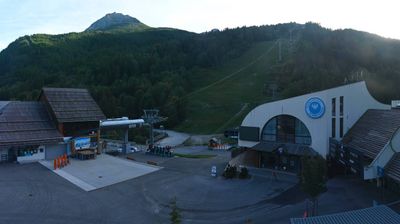

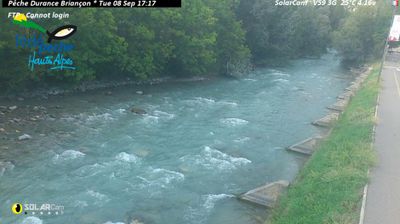


La Salle-les-Alpes has served as a mountain settlement in the Guisane valley of the French Alps since the Middle Ages. The commune includes the historic village of La Salle and Villeneuve, a major access point for the Serre Chevalier ski area, whose slopes extend along the valley above the river. The route through the Guisane valley links Briançon with the Col du Lautaret, a high Alpine pass leading towards Grenoble. Traditional stone-and-wood buildings remain part of the older settlements, while the surrounding terrain supports winter sports, hiking and cycling in warmer months. Find related webcams in the Serre Chevalier area to build a fuller picture of the Guisane valley.
2 webcams
Provence-Alpes-Côte d’Azur occupies France’s southeastern Mediterranean coast and Alpine borderlands. Its terrain runs from the Rhône delta and the Camargue wetlands to the limestone coves of the Calanques and the high valleys of the French Alps, while the Côte d’Azur forms its celebrated shoreline. Marseille, France’s oldest city, is a major port, and Avignon’s Palais des Papes recalls the 14th-century papal court. Inland, Provençal markets, olive cultivation and lavender-growing areas remain central to regional identity. Browse additional webcams nearby to see how Provence-Alpes-Côte d’Azur connects with the Mediterranean, the Alps and neighbouring Italy.
270 webcams
The Atlantic and Mediterranean coastlines, together with the Alps, Pyrenees and broad river basins, define much of France — they support maritime trade, farming, wine regions and travel throughout the year. The Seine runs through Paris, where the Eiffel Tower and the Louvre are among Europe’s most recognised landmarks. The Loire Valley is known for Renaissance châteaux, while Mont-Saint-Michel rises from a tidal bay in Normandy. Regional food traditions are equally distinctive, from Breton seafood to Provençal cooking, with bread, cheese and wine central to everyday life. France’s global cultural influence is evident in its language, literature, fashion and cinema. View additional webcams nearby to better understand how France’s coasts, plains and mountain borders relate to their surroundings.
2.2K webcams