 Amboise: Château Royal d'Amboise
Amboise has served as a royal seat in the Loire Valley since the late 15th century. Set above the Loire, the Château Royal d’Amboise was enlarged by Charles VIII and later became associated with Francis I and French Renaissance court life. Its ramped towers and terraces rise over the old town and riverbanks. Leonardo da Vinci spent his final years at nearby Clos Lucé, where he was welcomed by Francis I and died in 1519. The château’s Saint-Hubert chapel is traditionally regarded as his burial place. Amboise belongs to the UNESCO-listed Loire Valley cultural landscape, shaped by royal estates, historic towns and vineyards along the river.
Generated by AI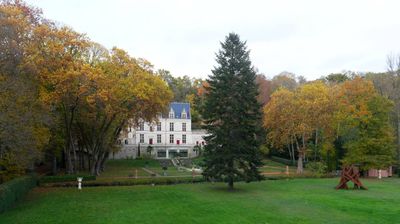
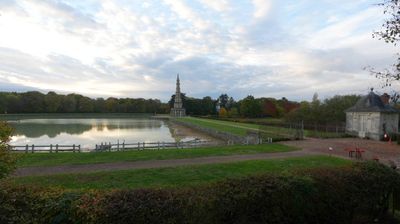
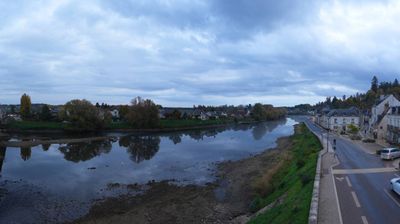



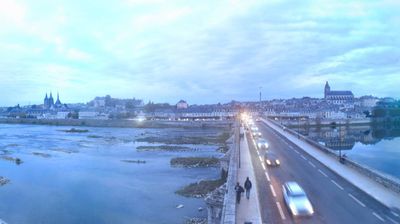


Across the Centre-Loire Valley, few towns have a past as inseparable from the French crown as Amboise. Set above the Loire, it was a favoured royal residence in the late Middle Ages and Renaissance, and the Château Royal d’Amboise retains its commanding position over the river. Francis I invited Leonardo da Vinci to spend his final years at nearby Clos Lucé; the Italian master died there in 1519. Amboise also gave its name to the 1560 conspiracy, a failed Huguenot plot against the young King Francis II during the mounting religious tensions of the era. Browse other webcams across the Loire Valley to place Amboise in a wider geographic context.
3 webcams
Among the regions of France, Centre-Loire Valley stands out for its concentration of Renaissance royal residences along the Loire River. The area around Blois and Chambord lies in a broad river plain of woods, farmland and vineyards, while the Loire remains the region’s defining waterway. Château de Chambord, commissioned by King Francis I in the 16th century, is renowned for its vast scale and distinctive French Renaissance design. Blois, once a seat of the French court, adds another important royal chapter. Part of the Loire Valley is listed as a UNESCO World Heritage site. Explore additional webcams nearby to see how Centre-Loire Valley connects with the Loire basin and surrounding countryside.
35 webcams
The Atlantic and Mediterranean coastlines, together with the Alps, Pyrenees and broad river basins, define much of France — they support maritime trade, farming, wine regions and travel throughout the year. The Seine runs through Paris, where the Eiffel Tower and the Louvre are among Europe’s most recognised landmarks. The Loire Valley is known for Renaissance châteaux, while Mont-Saint-Michel rises from a tidal bay in Normandy. Regional food traditions are equally distinctive, from Breton seafood to Provençal cooking, with bread, cheese and wine central to everyday life. France’s global cultural influence is evident in its language, literature, fashion and cinema. View additional webcams nearby to better understand how France’s coasts, plains and mountain borders relate to their surroundings.
2.2K webcams