 Idrija: G2-102 - Godovič, Zala
The landscape around Idrija is deeply wooded karst hill country, which has shaped both the built environment and local life. The town lies in western Slovenia along the Idrijca River, amid the forested uplands of the Dinaric karst. Idrija became internationally important through its mercury mine, worked for centuries and now included, with Almadén in Spain, on UNESCO’s World Heritage List. Mining also supported distinctive technical knowledge and the local tradition of Idrija lace, a bobbin-lace craft still associated with the town. Roads through the surrounding slopes link scattered settlements, while the compact valley town remains the cultural centre of this mountainous area.
Generated by AI

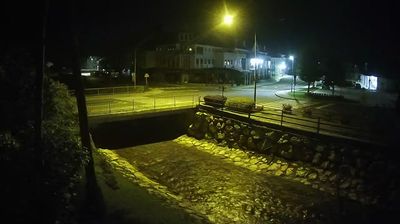
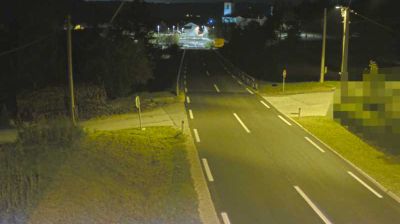
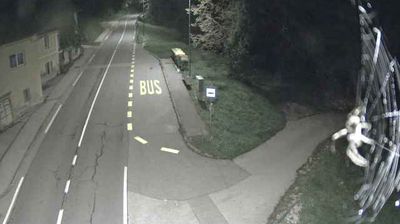

The wooded, steep-sided landscape around Idrija is defined by the Idrijca River valley, which has shaped both the town’s compact form and local economy. Mercury was discovered here in 1490, and Idrija became one of the world’s leading mercury-mining centres. Its former mine is part of the UNESCO World Heritage property Heritage of Mercury: Almadén and Idrija. The 16th-century Gewerkenegg Castle, built for mine administration, now houses the Idrija Municipal Museum, while delicate Idrija lace remains a valued local craft. Browse additional webcams from the surrounding area to extend your view of the Idrijca Valley and western Slovenia.
5 webcams
Slovenia occupies a meeting point of the Alps, the Pannonian Plain, the Dinaric mountains and the Adriatic coast in south-central Europe. The Julian Alps rise in the northwest, where Triglav is the country’s highest mountain, while the Soča River is known for its clear turquoise water. Karst terrain has shaped caves such as Postojna Cave and the Škocjan Caves, a UNESCO World Heritage site. Ljubljana combines a riverside old town with works by architect Jože Plečnik; farther east, wine-growing regions and thermal springs add another dimension. Slovenian food reflects Alpine, Mediterranean and Balkan influences. Find related webcams in the surrounding area to build a fuller picture of Slovenia and the northern Adriatic.
784 webcams