 Bad Kotzting: Rathaus

Bad Kötzting has served as a market town in the Bavarian Forest since the Middle Ages. The town stands on the White Regen, amid the low wooded hills of eastern Bavaria, and its compact centre is marked by tiled roofs, gabled houses and civic buildings around the market area. Its best-known tradition is the Bad Kötzting Pfingstritt, an annual Whitsun horseback procession that remains a major expression of local Catholic custom. The “Bad” in the name reflects the town’s status as a Kneipp health resort, while the surrounding Bavarian Forest places it in a region shaped by forestry, small towns and cross-border ties with Bohemia.
Generated by AI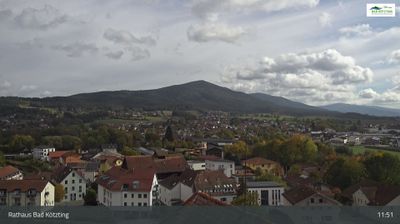
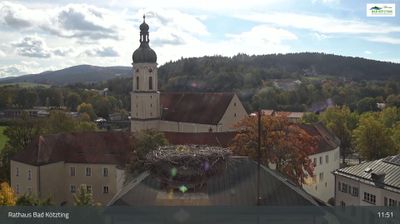

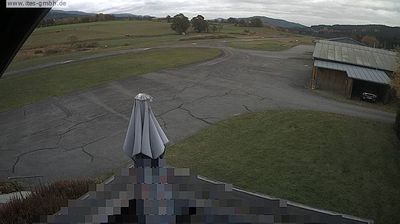
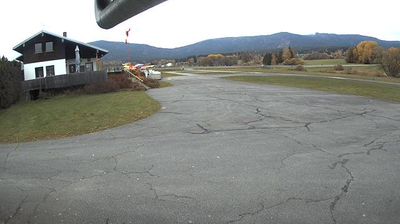
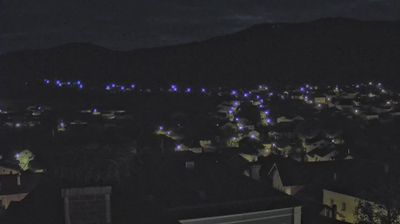
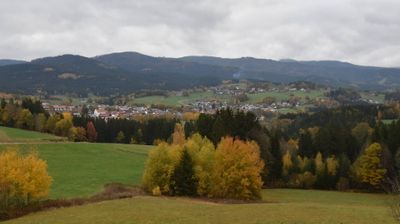

Bad Kötzting combines the measured pace of a Bavarian spa town with the living customs of a forest district, reflecting its position on the Weißer Regen in the Bavarian Forest. Officially recognised as a Kneipp spa, the town is associated with hydrotherapy practices based on the methods of Sebastian Kneipp. Its defining annual event is the Kötztinger Pfingstritt, a Whitsun Monday horseback procession documented from 1412; riders travel to Steinbühl in a long-standing act of religious tradition. The town lies in the Naturpark Oberer Bayerischer Wald, where wooded ridges and river valleys shape the wider region. Browse additional webcams from the surrounding Bavarian Forest to extend your view of Bad Kötzting and eastern Bavaria.
3 webcams
Built around the early medieval Duchy of Bavaria, Bavaria grew into Germany’s largest federal state. The Danube crosses its broad centre, while the Bavarian Alps form its southern edge and include the Zugspitze, Germany’s highest mountain. Munich is the state capital and the home of Oktoberfest, a festival rooted in an 1810 royal wedding. Beyond the metropolis, Franconia’s vineyards, Swabian towns and Alpine resorts reveal how varied this part of Germany can be. Browse additional webcams from the surrounding area to extend your view of Bavaria.
891 webcams
Germany stretches from the North Sea and Baltic Sea coasts to the Alps on its southern border, encompassing northern plains, river valleys and forested uplands. The Rhine, Danube and Elbe have long connected its regions, while the Black Forest and Bavarian Alps give the south a more dramatic relief. Berlin’s Brandenburg Gate and Museum Island reflect the capital’s role in German history and culture. Cologne Cathedral, a UNESCO World Heritage Site, rises above the Rhine, and the Bauhaus movement, founded in Weimar in 1919, transformed modern design far beyond Germany. Regional cooking, Christmas markets and brewing traditions bring further character to daily life. Browse additional webcams from the surrounding area to extend your view of Germany.
2.8K webcams