 Porto-Vecchio: Port
Porto-Vecchio combines a working maritime harbour with a hilltop Genoese citadel in a way that reflects its position on Corsica’s southeastern coast. The town stands at the head of the Gulf of Porto-Vecchio, a deep inlet framed by the slopes of the island’s interior. Founded by the Genoese in 1539, its old town retains fortifications and narrow streets above the waterfront. Below, the port handles ferry traffic and pleasure boats, while the coast nearby leads towards the beaches of Palombaggia and Santa Giulia. This meeting of walled upper town, marina and active quays gives Porto-Vecchio a distinctly seafaring character.
Generated by AI


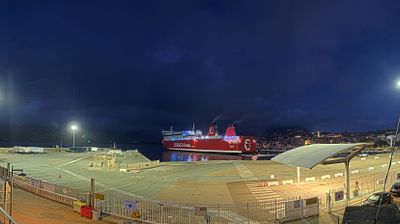
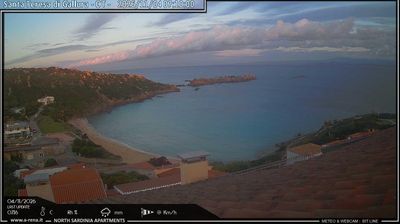

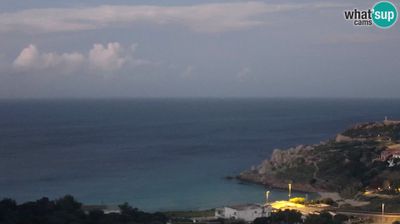
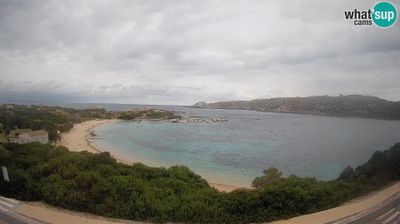

Porto-Vecchio sits on the Gulf of Porto-Vecchio in southern Corsica, France, where the island’s wooded interior descends towards the Tyrrhenian Sea. The town developed around a sheltered harbour and retains a Genoese-built citadel, whose ramparts and narrow lanes overlook the modern marina. Salt production was once central to local life, and the former salt marshes remain part of Porto-Vecchio’s identity. Beyond town lie the pale-sand shores of Palombaggia and Santa Giulia, while the granite uplands of the Corsican interior rise to the west. Continue through nearby webcams to explore different parts of Porto-Vecchio and southern Corsica.
4 webcams
Built around Mediterranean sea routes and mountain communities, Corsica grew into a distinctive French island with a strong regional identity. Its terrain rises abruptly from the coast to the granite summits of the central mountains, crowned by Monte Cinto, the island’s highest peak. The long-distance GR 20 crosses this rugged spine, while beaches and sheltered coves line much of the shore. Ajaccio, on the west coast, is the birthplace of Napoleon Bonaparte; elsewhere, the Corsican language, polyphonic singing and local food traditions reflect ties to both France and the wider Mediterranean. Find related webcams across Corsica and nearby shores to build a fuller picture of this Mediterranean island.
18 webcams
The Atlantic and Mediterranean coastlines, together with the Alps, Pyrenees and broad river basins, define much of France — they support maritime trade, farming, wine regions and travel throughout the year. The Seine runs through Paris, where the Eiffel Tower and the Louvre are among Europe’s most recognised landmarks. The Loire Valley is known for Renaissance châteaux, while Mont-Saint-Michel rises from a tidal bay in Normandy. Regional food traditions are equally distinctive, from Breton seafood to Provençal cooking, with bread, cheese and wine central to everyday life. France’s global cultural influence is evident in its language, literature, fashion and cinema. View additional webcams nearby to better understand how France’s coasts, plains and mountain borders relate to their surroundings.
2.2K webcams