 Monte: Observatory
Built around Madeira’s high central ridge, Pico do Areeiro grew into one of the island’s principal mountain destinations. At 1,818 metres, it is Madeira’s third-highest peak, set in the rugged interior where steep slopes and exposed ridges contrast sharply with the coastal settlements. The Observatory and Casa do Areeiro form part of the summit facilities, while the PR1 mountain route starts here and continues toward Pico Ruivo, Madeira’s highest peak. Volcanic terrain, access roads and footpaths define this elevated part of the island, with development concentrated close to the crest. Pico do Areeiro represents the mountainous counterpoint to Funchal and Madeira’s Atlantic shoreline.
Generated by AI

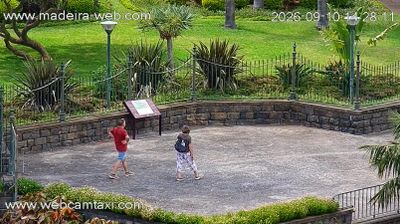

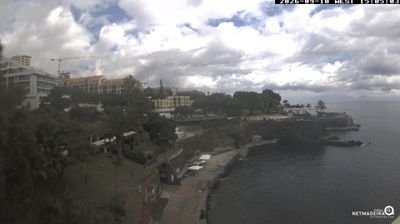
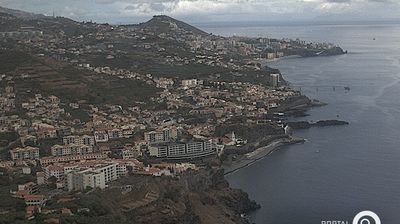
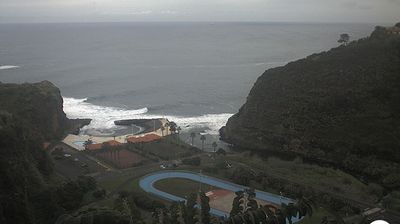
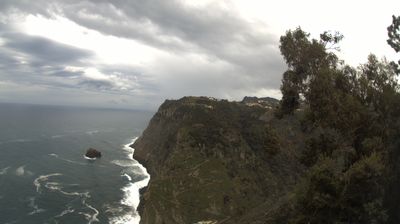


Monte lies along the steep slopes above Funchal’s Atlantic coast, where Madeira’s volcanic terrain rises sharply from the city toward greener uplands. This hilltop parish is closely associated with the Church of Our Lady of Monte, which contains the tomb of Charles I, the last emperor of Austria. The Monte Palace Tropical Garden brings together landscaped terraces, water features and plant collections on the former estate. Monte is also known for the Carreiros do Monte, who guide traditional wicker sledges downhill on the paved streets. Continue through nearby webcams to explore different parts of Monte and Madeira.
1 webcam
Among Portugal’s regions, Madeira stands out for its steep volcanic relief rising directly from the Atlantic Ocean. The autonomous archipelago lies southwest of mainland Portugal; its main island is shaped by deep valleys, rugged headlands and a high central spine. Laurisilva forest, protected as a UNESCO World Heritage site, survives on humid slopes, while the island’s levadas carry water through mountainside terrain. Funchal, the capital, is closely associated with Madeira wine, whose production helped connect the island to Atlantic trade. Continue with other webcams from Madeira to see how this Atlantic part of Portugal connects regionally.
18 webcams
Portugal has served as an Atlantic maritime link between Europe, Africa and the Americas since the 15th century. The Atlantic shapes its western and southern shores, while the Douro crosses northern wine country on its way to Porto and the Tagus meets the sea in Lisbon. Belém Tower and the Jerónimos Monastery recall the seaborne expansion of the Portuguese crown, and their Manueline stonework remains a defining feature of the capital. Beyond the cities, the Algarve is known for beaches and limestone cliffs, while Serra da Estrela introduces a highland counterpoint inland. Azulejo tiles, fado and Port wine are enduring elements of Portuguese culture. Find related webcams in the surrounding area to build a fuller picture of Portugal’s Atlantic coast and interior.
176 webcams